Ramblings

The Good Book

I suppose you could call me a bookworm; I’ve certainly brushed shoulders with more novels than the average person (if books had shoulders, that is.) I work at a little library in a town small enough to fit in your pocket. It’s in Alaska, which is more ordinary than you might imagine; I’ve never seen a brown bear or an igloo out the picture windows, though I’ve certainly spotted a moose or two. Mostly it’s just like any other small town: two grocery stores and a McDonalds, a community garden and a lot of nice people. 

The doors open at 11 a.m., and I gladly point folks in the direction of the cookbooks or suggest a cozy mystery. I ooh and ahh over the boxes of books that come in fresh from the presses and ready for displays—mostly the children’s books, all shiny covers and charming illustrations. The more years I clock into my little corner of the world, the more I come to realize how many books I haven’t read yet and how many lovely things there are still to discover.

Sometimes though, I feel like a pretender, secretly interested in so much besides (or even more) than the tomes I put on the shelf. I can see you gasping even now! Aren’t librarians (or library assistants, in my case) supposed to blissfully spend every free moment in a cardigan–happily absorbing stacks of novels with a cat on each leg? Well, I do love cats, and embrace my sweater-filled wardrobe wholeheartedly. I enjoy books, for that matter…but there is more than one kind of book in this world, and the ones I am most fascinated with aren’t always on the shelf.

You can learn so much by studying nature, for example. Taking a few moments away from a page and watching the sky, or patiently coaxing chickadees to take seeds from your hands. Your heart can learn words of joy that God wrote into His creation and painted into the woods.

And then there are people. All wrapped up in their own kind of covers, hinting at the sort of stories they could tell. They come into the library every day, and for a few minutes the chapters of our lives intersect. I see their children growing up, or hear about their current hobby, or find their artwork scribbled onto the catalog note papers, and they have no idea that I tuck many of those remembrances away—each adding a line to a sort of living, freestyle poem in my heart.

Little brown-haired girl who always wears a princess crown/ elderly man pushing his wheelchair-bound wife/ teenage boy playing chess.

Do you know I see you?

Mama with your ducklings all in a row/ spindly fellow with the crutches / someone looking for a job.

Do you know someone else does too?

Toothy ten year old with the shiny new library card and the sunny smile?

Bright eyes that love to look at the stars/ hands that wrote and asked for help/ plain face with the lovely soul...

Do you know He wrote a book for you? You are a treasured phrase in the story that He wrote?

Oh, can I show you the way to the Good Book? The Best Book?

Biblical · Uncategorized

A Review, The Pharisee’s Wife

Janette Oke is a name well-known among Christian Fiction circles. Her books have graced a thousand bookshelves, passed between friends at church, and been treasured finds at thrift stores. Several of her works have birthed film adaptions, such as the Love Comes Softly movies and When Calls the Heart series. Perhaps it shouldn’t have been a surprise to me to see her most recent release at the library– The Pharisee’s Wife–but it was.

For one, Janette is no less than 90 years old! Always a bit of a skeptic, I remember scrutinizing the front, back, and inside covers looking for another author who must have co-written Oke’s vision and released it under her name. But as 2nd Corinthians 12:9 says, “My grace is sufficient for you, for My strength is made perfect in weakness.” I truly believe God worked through Janette’s years and enabled her to write, to my mind, her finest work.

In fairness, I haven’t read a great portion of the staggering 70+ novels Oke has penned. Speaking humbly–with respect for how much she contributed to the Christian Fiction genre–I didn’t connect with most of those I tried. The romances, in particular, often felt cliche and even a bit hammy to me… I’ll never forget one chapter from When Calls the Heart where the female protagonist faints dramatically and is predictably gathered up in the arms of the ever-ready handsome Mountie.

Whether we see eye to eye in that regard– adore Oke or nay– I hope you will give The Pharisee’s Wife an opportunity. The book reads as a different flavor of love story– a love story to the Gospel, a love story to God’s people waiting expectantly for Him to come again, and a love story to ordinary women. It connects you to the heart of a young girl during Jesus’ first coming, trying to make sense of everything she is hearing about the “teacher” both from his followers and from her Pharisee husband, who bitterly hates Him.

The Pharisee’s Wife is set in a completely different time and culture than Janette has typically written in all her life, yet it felt natural and well researched. Mary–the titular wife– isn’t “ahead of her time.” She doesn’t think or talk like a modern woman, and I find that refreshingly realistic. She’s little more than a child, raised in an insular, tiny village… naive, innocent, and unsophisticated. She’s also kind, discerning, and warmly endearing.

Mary “ties the knot” with a Pharisee–a total stranger–and in turn her family receives a dowry that will help her crippled father live a comfortable life. Her husband, Enos, is neither gentle nor generous. Thankfully (depending on how you look at it) he spends most of his marriage away from home, trying to make an end of Jesus.

The book isn’t without flaws. The book lost steam in the second half– and the ending in particular left me somewhat unsatisfied. There were hints at directions I thought the book was headed that never led to a conclusion (some characters in particular were left dangling). There was one scene where the Gospel is shared, and I remember noting it felt unnatural, somehow. While the Gospel certainly has not changed since Jesus first shared it– repentance and belief in the Messiah for forgiveness of sins– I doubt the earliest believers sounded like TV evangelists. Especially since Jesus hadn’t even died or risen yet, so their understanding of his teachings wasn’t “complete.” I wished that Jesus’ actual words had been quoted.

That said, after reading the Note from the Author at the end of the book, I had a newfound respect even for some of the plot points I would have preferred to tweak. Janette intentionally left the ending a bit anticlimactic, pointing forward to Christ’s return, “for the climax of God’s great plan is still in the future.” Some of her character arcs made more sense when she explained that she wished to remind readers that “…it is not always the person we would choose as worthy who makes the important decision of becoming a believer. God has given each individual free will. We deeply grieve over those we love who do not choose to repent and believe. At other times, one whom we see as the greatest sinner does seek forgiveness and God responds in mercy.” While imperfect (as all books are besides our Heavenly Father’s), The Pharisee’s Wife left me with spiritual food to chew on and ultimately honored our Lord. I commend the author for this thoughtful story and her prayer, with which I will close:

“To you who hold this book in your hands, no matter the time or your circumstances, may you know that I have prayed for you, that in some way, as only God through his Spirit can do, your heart may be touched to meet whatever is your present, personal need.”

Uncategorized

Tennessee Centennial Exposition

After finishing Count the Nights by Stars, I couldn’t resist looking up some photos of the Tennessee Centennial Exposition of 1897 (the primary setting of the book). I thought I’d share my discoveries here! There is a lot more information out on the internet, but maybe you’ll enjoy some of these highlights which were also featured in the novel.

This is the giant see-saw ride I mentioned in my last post. It went upwards of 200 feet in the air and cost 25 cents for your first ride and a dime for every ride thereafter. Apparently the amusement was meant to rival another recently popular construction: the Ferris Wheel, which had just been constructed by George Ferris and opened in 1893. In the distance, you can see the Memphis building, which was built to resemble a Pyramid.
I love this image. There’s the Memphis building again, easily visible to the right. In front is what appears to be the Parthenon. I wondered if you could spy the see-saw, and you can– poking above the hills in the upper left.

It’s hard to believe these beautiful buildings were created solely for the 6 month celebration and were torn down afterward, as they were not built solidly enough to last long-term.

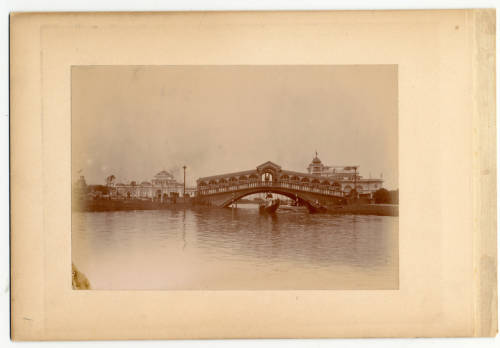
The Rialto Bridge across Lake Watauga. The Rialto housed shops where you could buy souvenirs commemorating the Centennial. Beneath it you can see a gondola, which you could ride for a fee. Watauga was a man-made, artificial lake.
A final image, a bird’s eye view of the grounds. I am a bit confused, because in the last photo you could view the Memphis building very close to the Parthenon, and here I cannot. There is a triangular building across the lake, but in the photo it appears very close. Perhaps this was an early design for the park layout, before it was built, and the map changed somewhat? If I am looking at it from the wrong angle, let me know.

Hope you enjoyed a little peek into a piece of history I knew nothing about until picking up Count the Nights by Stars by Michelle Shocklee. Click here to see my review of that book. Let me know if you have any other interesting tidbits of information about this or any other Expositions of olden days!

Full Reviews · Historical

Full Review, Count the Nights by Stars

In my last post, I said that I planned to look into other books by Michelle Shocklee after being so taken with Appalachian Song. I’ve certainly done so– since then I’ve finished two more and started a third! If you haven’t heard about this relatively new name in Tyndale, she’s worth looking into at the local library or bookstore. I would be especially likely to mention her to someone who loves Cathy Gohlke, as the writing style feels similar to me.

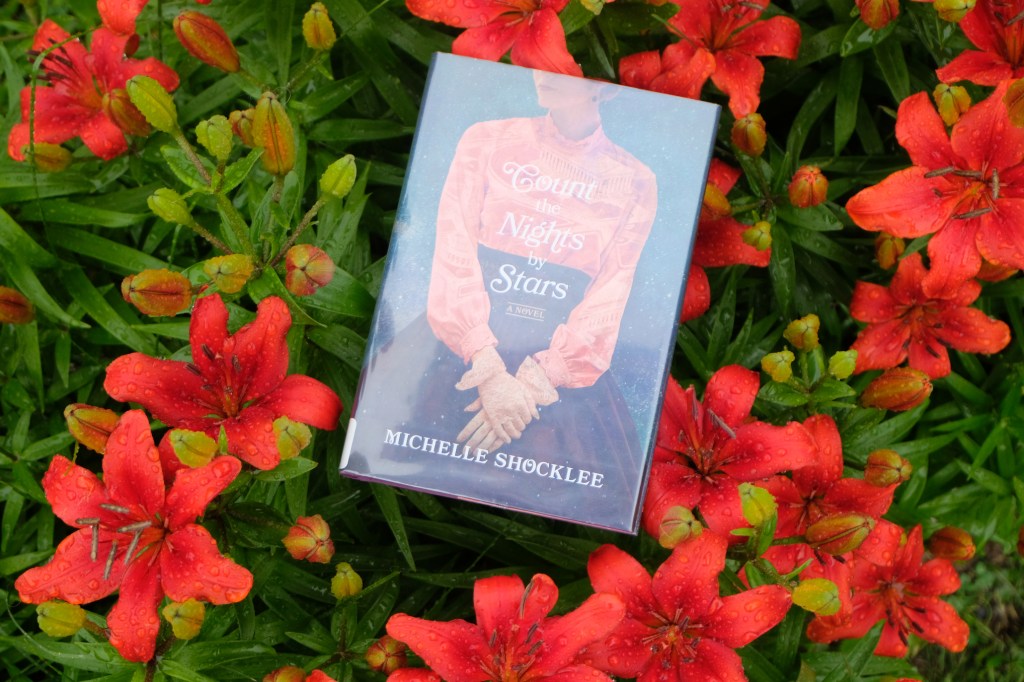
Count the Nights by Stars is a dual timeline story centered around the lives of Priscilla and Audrey–one a young woman living in 1897, the other coming of age in the early 1960s. Each has ties to a famous Nashville, Tennessee hotel called Maxwell House. Sound familiar? It’s the real-life namesake of Maxwell House Coffee. (“Good to the last drop!“) The choice of setting was masterful on Michelle’s part– the hotel is a fascinating location, saturated with colorful history and events from which she could easily propel her story.

Priscilla visits the Maxwell with her family just before the turn of the Century, when Nashville is brimming with all the excitement of the Tennessee Centennial Exposition. I relished being whisked away into the wonder of this incredible event… 200 acres of discovery, with everything from a literal recreation of the Parthenon to a giant steel see-saw ride that fit 20 people at a time and propelled you several hundred feet into the air!

In the 1960s, Audrey gathers clues from Priscilla’s Centennial scrapbook and slowly pieces together what unfolded all those years before. Both young women are coming of age in their respective timelines; Audrey is maturing in how she views her autistic little brother and the death of her mother. Meanwhile, Priscilla’s eyes are opened to the need for Christ’s mercy and help to be extended to women trapped in the prostitution industry of her day.

While I really enjoyed both female leads, and adored the setting, the dialog and plot felt a bit stilted. Conversations, especially ones about faith topics, sometimes came across as unnatural to me. The storyline was somewhat simplistic, if solid. In some ways, I was reminded of old black and white films– the bad guy is overwhelmingly bad, the mother is spoiled and aggravating in an exaggerated way, and there’s a bit too much telling versus showing. But, like many classic movies, this book is also wholesome and warm. Since Count the Nights by Stars came out earlier than Appalachian Song, it’s possible that Shocklee just needed more time and practice to grow into her writing talent. If, somehow, she ever read this review, I’d hope she would take the criticism as constructive and know that I still think there is a lot in this book to praise.

One last thought… what is up with all the similarly titled “star” books in Christian Fiction lately? I really can’t keep them straight anymore. There’s Counted with the Stars by Connilyn Cossette… Hidden among the Stars by Melanie Dobson… and I’m pretty sure both are Tyndale books, as well. If you’ve read this, tell me your opinion of the title and cover. Do you think they suit the novel?

God bless, and happy reading!

Full Reviews · Historical

Appalachian Song by Michelle Shocklee

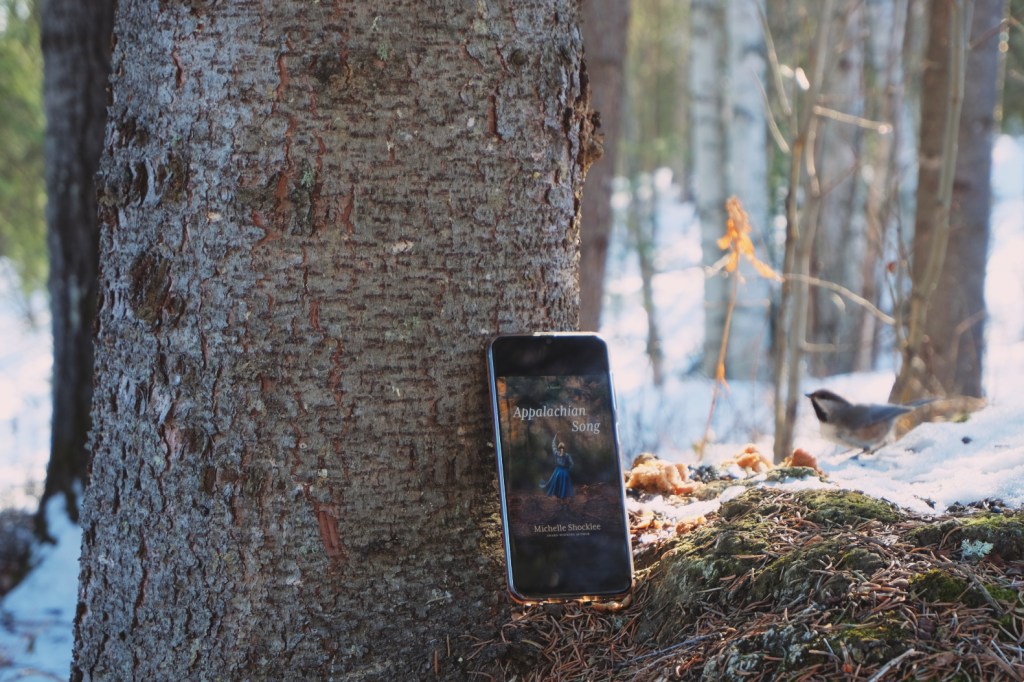
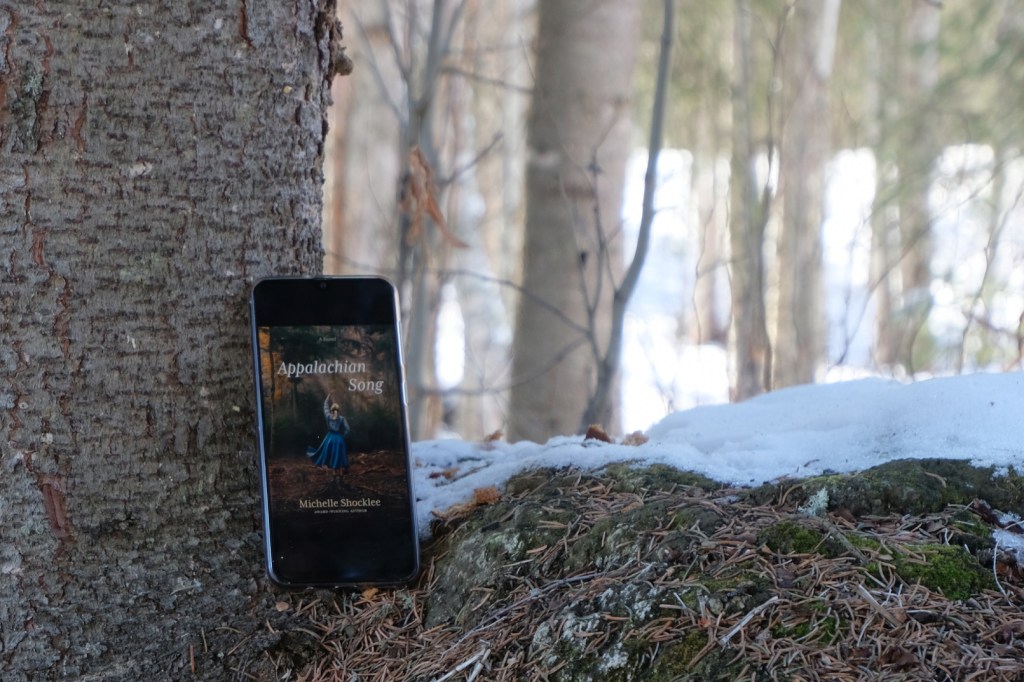
It’s a great feeling to discover a writer you didn’t know anything about and love that first book; I imagine it’s akin to finding the first gold nugget in a creek. You know you’ve got a treasure in your hands, as well as the tantalizing prospect of more to be found—maybe just around the corner! Somehow Michelle Shocklee flew under my radar until just recently, when I was drawn to the beautiful cover image for Appalachian Song and checked out the audiobook version from my library.

Appalachian Song is the story of a young pregnant girl who is taken in and cared for by a group of older spinster sisters. They live alone in a backwoods Tennessee cabin while the Second World War wages. Songbird, as the sisters lovingly call their little ward, is an utterly charming character who quickly wins the hearts of her new family. Even grumpy-but-practical sister Jenny, who reminds me a lot of Marilla Cuthbert (from Anne of Green Gables), warms under Songbird’s influence.

Flashing forward to the 70s, Country singer Walker Wylie tries to dig up the truth about where he came from, and what happened to his parents. I’m sure you can guess where this is going, but I enjoyed following along as the story unfolded, as there was a bit of mystery around what exactly had/would happen to Songbird and her baby.

Because some of the subject matter is more mature in nature, I would advise caution before giving this to younger readers. That said, the author handles topics like teen pregnancy with compassion and discretion. Bertie Jenkins, one of the sisters who cares for Songbird, is an especially memorable character; a midwife, Bertie becomes like a grandmother to her charge, as well as a spiritual mentor. Bertie beautifully shares the Gospel with Songbird as well as Biblical wisdom and encouragement. Even so, she’s every bit a product of her time and place, equal parts grit and practicality.   

I wish I could say I loved every character as much as Bertie (if I did, this would surely be a five-star review), but I never warmed up to Walker. I think if the author had mingled in some of his more positive character traits early on–alongside his frustration and anger over his recently discovered adoption– I would have been more sympathetic towards him. As it was, he came across as whiny and self-absorbed. Not so detrimental in itself–since he had a huge “about face” moment at the end– if not for an underlying romance thread throughout the book. I still don’t understand what exactly the girl fell in love with, since Walker mostly wallowed in angst the entire time. Just a few well-placed paragraphs of Walker charming everyone with a few guitar melodies, embracing farm life, or doing an occasional kindness would have really helped me root for him at his lows. Either that, or hold off on the romance till the end when he has a change of heart, and give a subtle hint that it’s in the cards so we all know he gets a happy ever after.

While I was also a bit unsatisfied with the ending written for Songbird (I didn’t feel like it made sense for her character, but I can’t say why due to spoilers), I won’t deny this book left me with a lot of good feelings. One of my favorite verses, Psalm 90 verse 2 says, “Before the mountains were brought forth, or ever You had formed the earth and the world, even from everlasting to everlasting, You are God.” I hope you will meander through the Appalachians as well and leave with the same sense of warmth, dwelling on our everlasting Creator.

Biblical · Full Reviews

The End of the Magi

The wise men…so familiar to millions of Christians and non-Christians alike. Icons of the awe-inducing account of Jesus’ birth and early years. The inspiration for hauntingly lovely Christmas melodies and countless works of art; yet shrouded in mystery and beauty like the star they followed. It comes as no surprise to me that someone would want to set their pen to write a story about these men and their journey– but seeing it so skillfully done by author Patrick W. Carr–that is a gift in itself.

The End of the Magi is the tale of Myrad, who must flee for his life when his adoptive father is murdered. Myrad takes up his father’s work as a Magi– one of a group of men faithfully counting down the days till the Messiah’s birth based on a calendar established in Daniel’s prophecy (see Daniel chapter 9)– while encountering dangers and misfortunes far beyond what any one person should have to endure.

As Myrad journeys, he finds new family, new enemies, political intrigue, and ultimately makes his way (following the star) to meet the Christ-child. How he arrives at that point in one piece can only be attributed to God’s protection, but I loved the grand scale of this story; fast-paced and colorful, the perfect book to read on a winter day when you want to feel a scorching sun on your face and sand under your feet. It’s easy to escape the cold and dreary of December when you are Myrad, riding your camel through the desert or drawing a bow on hostile armies!

The End of the Magi is easily one of my favorite Christian fiction books I’ve reviewed thus far– Carr’s take on the Magi was compelling and thought provoking. The best Christian fiction pushes me to re-examine Biblical texts with fresh eyes, and Carr achieved this goal while also giving us an energetic, thrilling adventure with likeable and memorable characters. To be fair, I do feel Carr could have done a better job wrapping up the story– while I was happy with how things turn out, the epilogue felt rushed and a bit sloppy to me. It was as if the author originally intended to end the story earlier on and then decided to try to pack 30 extra years into a few final chapters (last minute before publication). Whether or not that is true, I found myself scratching my head. I also saw complaints from other reviewers about the level of geopolitics in this tale, and I agree that this might not be the book for you if you have a distaste for world history or power struggles. Personally, I found it fascinating to see a broader picture of what was happening in other countries outside of Israel at the time of Christ, especially from the perspective of such enjoyable characters.

Flaws aside, this story was excellent– worthy of five stars… and the perfect choice to purchase or place on hold at the library for a Christmastime read! I’m hoping posting this review a bit before Thanksgiving will allow you the time to do just that. If you have a favorite Christian fiction Christmas novel of your own, share it in the comments below!

Allegory · Fantasy · Full Reviews

The Dragon and the Stone by Kathryn Butler

Finding a clean, wholesome, and creative new book series for children can be challenging in this day and age, and much more so if you would like to incorporate Christian Fiction with sound messages. I stumbled across a new series that (if book one is any indication) ticks all the boxes! I haven’t written any reviews in quite some time… I may have to do a few typing exercises and shake the cobwebs off the blog, but bear with me!

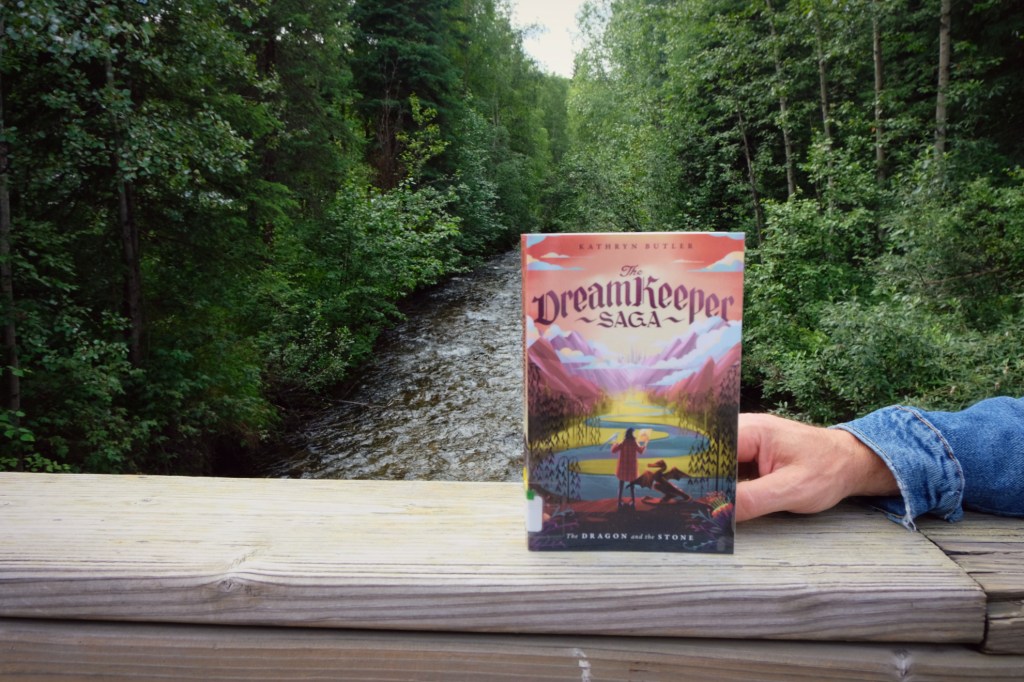
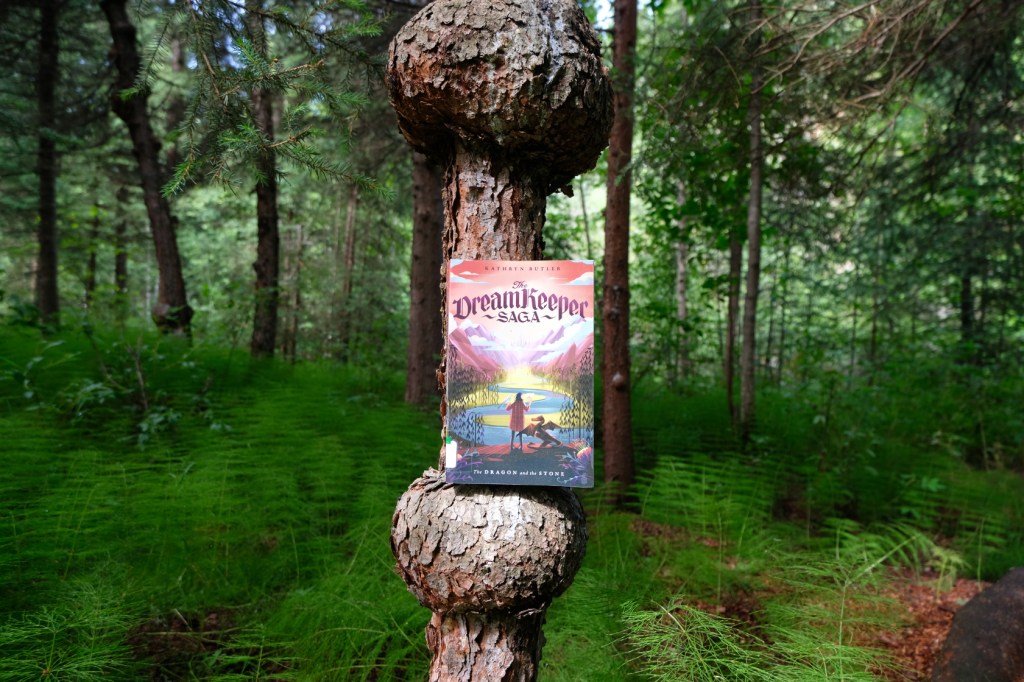
The Dragon and the Stone is the first book in the Dreamkeeper Saga by Kathryn Butler. The series opens with 12 year old Lily McKinley discovering a dragon in her kitchen. Shortly later she is whisked off to another dimension– a dream world filled with characters and animals that are brought to life by the imaginations of people back home. The premise allows for almost limitless creativity and fun, so expect plenty of beautiful and unusual creatures, places, and people. Not everything is unfamiliar, though; you’ll also run into incarnations of beloved literary favorites like Robin Hood and Lancelot.

How this new dimension has its origins in the Garden of Eden is a really clever (if, of course, totally fictitious) idea, but I don’t want to give away too much. Jesus makes appearances in an allegorical way (think Aslan in Narnia). That said– perhaps not wanting to seem to steal from C.S. Lewis’ works–Butler presents Christ as a magnificent unicorn. This is something I felt slightly uncomfortable with, for reasons I have been trying to work out. Perhaps it’s just easier to accept Aslan the lion as a picture of our Savior because God already describes himself as a lion in Scripture, and I think we need to be very careful to depict God only as He has revealed Himself or His character. That said, I can’t think of a lot of other animals God compares Himself to that the author could have used allegorically– a lamb or an eagle come to mind. I guess I will need to make a study of pictures of Christ/God in the Bible! Interestingly, I’ve since learned that in the middle ages unicorns represented the incarnation of Christ and were symbols of purity and grace.

Some aspects of the story felt a bit flat to me– the characters and dialog could use a bit of fleshing out– but I’m hopeful now that the premise has been established the sequels will be able to expand and improve on those difficulties. Overall, the story had me on the edge of my seat– the author did an excellent job creating a sense of adventure and possibility! This book would make a PERFECT read-aloud– short chapters, with lots of suspense. Not to mention opportunities galore to try your hand (voice?) at accents– pirates, dragons, knights, — even Merlin makes an appearance.

I’m giving this a hearty 4 stars rating and have high hopes the the rest of the Dreamkeeper Saga will attain to a perfect 5. Do you have other children’s Christian Fiction recommendations I should try? Also, does anyone recognize the train in the first cover photo? Tell me if you’ve been there too or would like to hear about it. Happy reading and summer adventures!

Fantasy · Full Reviews · Science Fiction

The Boy Who Fell From the Stars

I don’t review much children’s fiction here on the blog, but I absolutely cannot pass up the opportunity to talk about this gem, The Boy Who Fell from the Stars. Not only is it Christian fiction (hard to find for kids these days) it also falls into the science fiction genre… with just a dash of fantasy. I really wish this series (a three book set: And They Found Dragons) had been available when I was growing up– it would have checked every box for me. Spaceships? Yes. Young people tasked with saving humanity? Yes. Maybe throw some dragon slaying in there? Why not? Yes!

Best of all, the authors don’t resort to making the entire thing an allegory to incorporate Christian messages. Some elements allude to truths, certainly– such as the dragons themselves as a representation of fear– and certainly, the setting is a far-fetched at times; but it doesn’t completely disconnect from regular Christian life. Which is all the more surprising considering this was written by Ted Dekker and his daughter Rachelle. In my mind, surreal alternate realities are their trademark style, for good or bad… and I’m glad they stayed more grounded here.

Truth be told, I hope the Dekkers continue to focus on children’s literature. It seems to be the perfect framework for their unique style. Their creative and colorful storytelling glows in an imaginative young mind, while Ted has toned down the darker, more violent aspects of his writing (I think one of his biggest detractors among adult readers I’ve spoken with). Rachelle has been criticized for being too vague with the Christian messages she includes in her books, but when writing for children she necessarily makes her points clearer and more distinctly anchored to Scripture.

So what is the story? Here’s an excerpt from the synopsis:

It is said a child will lead them. But lead them where?
Jack is just 12, born on an Ark orbiting Earth among 169 survivors of a global apocalypse who eagerly await the planet’s restoration so they can return to the surface. With supplies dangerously low, the time for waiting is over. Humanity must return now or die among the stars.
Unfortunately there is a problem. A big one. Dragons have inexplicably risen from Earth’s ashes. 

Jack, the protagonist, is an extremely likable hero. Girls will enjoy his plucky best friend, Samantha. Jack’s mom–who teaches him about Yeshua despite anti-religion laws–is basically a walking talking hug in the best possible way. The Biblical messages were pretty down to earth (pun fully intended!) and I loved that when a situation got tough, Jack’s mom didn’t make empty promises–she explained to him that if something bad DID happen, everything would still be okay because they are trusting in God and would be with Him. Ultimately, His plan is good, even in hard times! I am also still chewing on some truth shared during a scary moment, when Jack thinks about 1 John 4:18. (...perfect love casts out fear...)

All in all, if you are looking for something with good messages and a bit of color, I would recommend this as a perfect family read-aloud, especially for those with little ones old enough to not be too frightened by a “mad scientist” doctor or the threat of toxin-spewing dragons (maybe 9 and up?). I haven’t read books 2 and 3 yet, but my fingers are crossed for an even better sequel and finale to this great series opener.

Full Reviews · Historical

Full Review, Stories That Bind Us

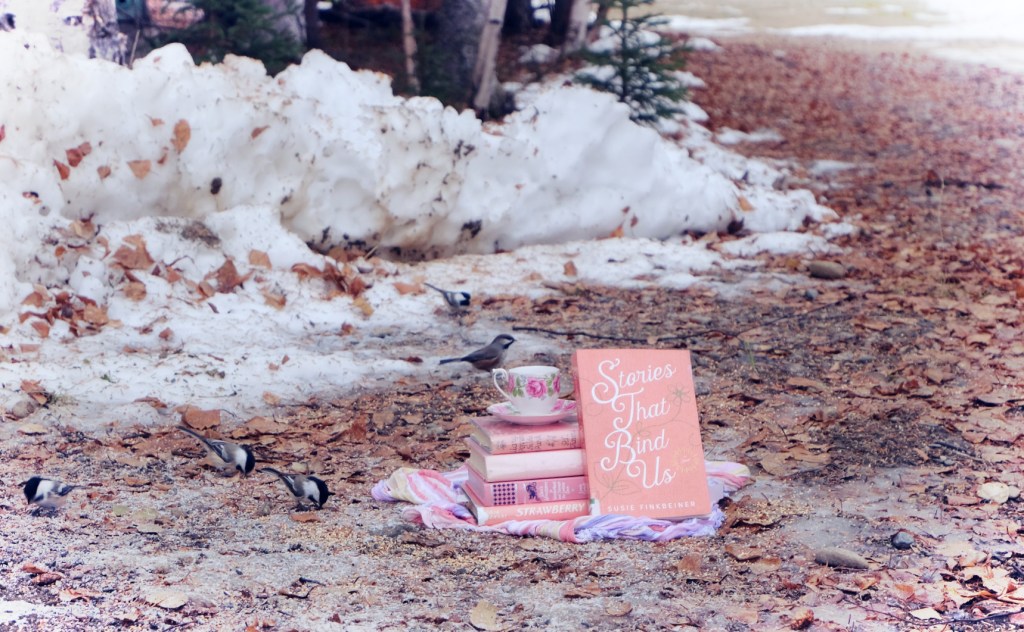
Let’s hope that I don’t end up with a bill for damages to this library book… I may have realized too late that snow was melting through the scarf I had used as a safe spot to nestle my stack. Oops! Of course, if I absolutely must pay a damages bill now and again, I’d be pleased to be paying for a book like Stories That Bind Us. If the library decides to replace the copy, I can keep the one I paid for (and I would love to add another Susie Finkbeiner book to my collection).

“Books are for the birds.”

Susie Finkbeiner may sound familiar if you remember my review of her other title, All Manner of Things, one of my favorite Christian fiction reads ever. Stories That Bind Us is the meandering tale of Betty Sweet, a middle aged woman who finds herself suddenly widowed. Living in the 1960s, Betty is barely past the early stages of grief when she finds herself unexpectedly the caretaker of her kindergarten-age nephew. I could use flowery phrases to describe this book, such as “a contemplation on loss” or “a compassionate look at mental health” and insert some words like reflective and poignant. All of those would be apt, but I think it would be simpler to say that Stories That Bind Us is not action-oriented or tightly paced. It is a thoughtful, warm, and absorbing book chronicling Betty’s healing process, day to day life in the ’60s, and the growing love between a caring aunt and a hurting little boy.

Betty has a wonderful imagination, and concocts many fanciful tales to comfort and entertain her young charge, Hugo. Many of them are told in full within the pages of the novel, so if you like children’s stories, this may be the book for you. That said, little here is cloying– Betty deals with loss as well as the responsibility of seeking help for her mentally ill sister (Hugo’s mother). As I read, I found myself wishing our protagonist was more involved in her sister’s care and the doctors’ treatment choices, but I do think the way it is written is probably realistic for the time. I don’t think mental illness was understood or approached then in the same way it might be today. Like All Manner of Things, I wished that Scripture was a bigger anchor to the story and its message, but the tone was hopeful. The ending was happy, in many ways, but somehow felt… unfinished, or unsatisfying. I really can’t say more without giving away too much.

Overall my rating is a solid 3/5 stars. While acknowledging a few flaws, there is something so utterly… delightful about Susie’s style and characterization I could easily be convinced to sneak out an extra star if pressed! This book makes me feel like snuggling up with a blankie and double chocolate chip cookies to ease me through the sad parts. Not that I’d turn down double chocolate chip cookies with any book! But somehow I think they’d taste better… with the Stories That Bind Us.

Ramblings

Sourdough and “Stones for Bread”

Bread making.

I’m not sure I could come up with something novel to say about the process– after all, people have been shaping loaves for centuries. My first thought was to share something poetic; I could wax on about the smell of yeast…the warmth of dough under my hands…the irresistible, velvety softness of flour.

Christa Parrish, author of Stones for Bread, manages much better than I to write a love story to the staple of human history. Tucked here and there between the pages of her book are instructions to make your first sourdough starter and recipes for Dark Chocolate Pain au Levain and Brioche Sticky Buns, among others. Regularly scattered throughout are tidbits on bread throughout the ages as well as musings on its Scriptural importance. Bread is woven throughout Scripture–in its stories and used symbolically– more than I think I realized before or thought about.

As for the fiction Christa pens, I admit: I have mixed feelings. While the tale of a bakery owner still healing from the scars of a tragic childhood resonated emotionally, I found myself a bit conflicted over some of the messages and meaning in the book. Ultimately I couldn’t resolve my differing thoughts about the novel clearly enough to feel as if I could give it a proper rating, or a fair review. Still, I thought it was worth mentioning, and if you read it I’d be interested in hearing your opinion of it.

Also…bringing up this book makes for the perfect excuse to share a favorite bread recipe, am I right?! While nothing overly complicated or fancy, I’ve really enjoyed this recipe for Garlic and Herb dinner rolls. I don’t have a KitchenAid, so I just knead them by hand for 15-20 minutes, and they always seem to turn out really well. I also speed up the rise time by turning on the oven briefly, then turning it off and putting the dough inside the warm oven. Follow the link above if you’d like to take a peek at these rolls and the rest of It’s Always Autumn’s website. Otherwise, enjoy the rest of your week– reading, or baking, or doing whatever God has for you to do. ❤