Biblical · Uncategorized

A Review, The Pharisee’s Wife

Janette Oke is a name well-known among Christian Fiction circles. Her books have graced a thousand bookshelves, passed between friends at church, and been treasured finds at thrift stores. Several of her works have birthed film adaptions, such as the Love Comes Softly movies and When Calls the Heart series. Perhaps it shouldn’t have been a surprise to me to see her most recent release at the library– The Pharisee’s Wife–but it was.

For one, Janette is no less than 90 years old! Always a bit of a skeptic, I remember scrutinizing the front, back, and inside covers looking for another author who must have co-written Oke’s vision and released it under her name. But as 2nd Corinthians 12:9 says, “My grace is sufficient for you, for My strength is made perfect in weakness.” I truly believe God worked through Janette’s years and enabled her to write, to my mind, her finest work.

In fairness, I haven’t read a great portion of the staggering 70+ novels Oke has penned. Speaking humbly–with respect for how much she contributed to the Christian Fiction genre–I didn’t connect with most of those I tried. The romances, in particular, often felt cliche and even a bit hammy to me… I’ll never forget one chapter from When Calls the Heart where the female protagonist faints dramatically and is predictably gathered up in the arms of the ever-ready handsome Mountie.

Whether we see eye to eye in that regard– adore Oke or nay– I hope you will give The Pharisee’s Wife an opportunity. The book reads as a different flavor of love story– a love story to the Gospel, a love story to God’s people waiting expectantly for Him to come again, and a love story to ordinary women. It connects you to the heart of a young girl during Jesus’ first coming, trying to make sense of everything she is hearing about the “teacher” both from his followers and from her Pharisee husband, who bitterly hates Him.

The Pharisee’s Wife is set in a completely different time and culture than Janette has typically written in all her life, yet it felt natural and well researched. Mary–the titular wife– isn’t “ahead of her time.” She doesn’t think or talk like a modern woman, and I find that refreshingly realistic. She’s little more than a child, raised in an insular, tiny village… naive, innocent, and unsophisticated. She’s also kind, discerning, and warmly endearing.

Mary “ties the knot” with a Pharisee–a total stranger–and in turn her family receives a dowry that will help her crippled father live a comfortable life. Her husband, Enos, is neither gentle nor generous. Thankfully (depending on how you look at it) he spends most of his marriage away from home, trying to make an end of Jesus.

The book isn’t without flaws. The book lost steam in the second half– and the ending in particular left me somewhat unsatisfied. There were hints at directions I thought the book was headed that never led to a conclusion (some characters in particular were left dangling). There was one scene where the Gospel is shared, and I remember noting it felt unnatural, somehow. While the Gospel certainly has not changed since Jesus first shared it– repentance and belief in the Messiah for forgiveness of sins– I doubt the earliest believers sounded like TV evangelists. Especially since Jesus hadn’t even died or risen yet, so their understanding of his teachings wasn’t “complete.” I wished that Jesus’ actual words had been quoted.

That said, after reading the Note from the Author at the end of the book, I had a newfound respect even for some of the plot points I would have preferred to tweak. Janette intentionally left the ending a bit anticlimactic, pointing forward to Christ’s return, “for the climax of God’s great plan is still in the future.” Some of her character arcs made more sense when she explained that she wished to remind readers that “…it is not always the person we would choose as worthy who makes the important decision of becoming a believer. God has given each individual free will. We deeply grieve over those we love who do not choose to repent and believe. At other times, one whom we see as the greatest sinner does seek forgiveness and God responds in mercy.” While imperfect (as all books are besides our Heavenly Father’s), The Pharisee’s Wife left me with spiritual food to chew on and ultimately honored our Lord. I commend the author for this thoughtful story and her prayer, with which I will close:

“To you who hold this book in your hands, no matter the time or your circumstances, may you know that I have prayed for you, that in some way, as only God through his Spirit can do, your heart may be touched to meet whatever is your present, personal need.”

Biblical · Full Reviews

The End of the Magi

The wise men…so familiar to millions of Christians and non-Christians alike. Icons of the awe-inducing account of Jesus’ birth and early years. The inspiration for hauntingly lovely Christmas melodies and countless works of art; yet shrouded in mystery and beauty like the star they followed. It comes as no surprise to me that someone would want to set their pen to write a story about these men and their journey– but seeing it so skillfully done by author Patrick W. Carr–that is a gift in itself.

The End of the Magi is the tale of Myrad, who must flee for his life when his adoptive father is murdered. Myrad takes up his father’s work as a Magi– one of a group of men faithfully counting down the days till the Messiah’s birth based on a calendar established in Daniel’s prophecy (see Daniel chapter 9)– while encountering dangers and misfortunes far beyond what any one person should have to endure.

As Myrad journeys, he finds new family, new enemies, political intrigue, and ultimately makes his way (following the star) to meet the Christ-child. How he arrives at that point in one piece can only be attributed to God’s protection, but I loved the grand scale of this story; fast-paced and colorful, the perfect book to read on a winter day when you want to feel a scorching sun on your face and sand under your feet. It’s easy to escape the cold and dreary of December when you are Myrad, riding your camel through the desert or drawing a bow on hostile armies!

The End of the Magi is easily one of my favorite Christian fiction books I’ve reviewed thus far– Carr’s take on the Magi was compelling and thought provoking. The best Christian fiction pushes me to re-examine Biblical texts with fresh eyes, and Carr achieved this goal while also giving us an energetic, thrilling adventure with likeable and memorable characters. To be fair, I do feel Carr could have done a better job wrapping up the story– while I was happy with how things turn out, the epilogue felt rushed and a bit sloppy to me. It was as if the author originally intended to end the story earlier on and then decided to try to pack 30 extra years into a few final chapters (last minute before publication). Whether or not that is true, I found myself scratching my head. I also saw complaints from other reviewers about the level of geopolitics in this tale, and I agree that this might not be the book for you if you have a distaste for world history or power struggles. Personally, I found it fascinating to see a broader picture of what was happening in other countries outside of Israel at the time of Christ, especially from the perspective of such enjoyable characters.

Flaws aside, this story was excellent– worthy of five stars… and the perfect choice to purchase or place on hold at the library for a Christmastime read! I’m hoping posting this review a bit before Thanksgiving will allow you the time to do just that. If you have a favorite Christian fiction Christmas novel of your own, share it in the comments below!

Biblical · Full Reviews · Historical

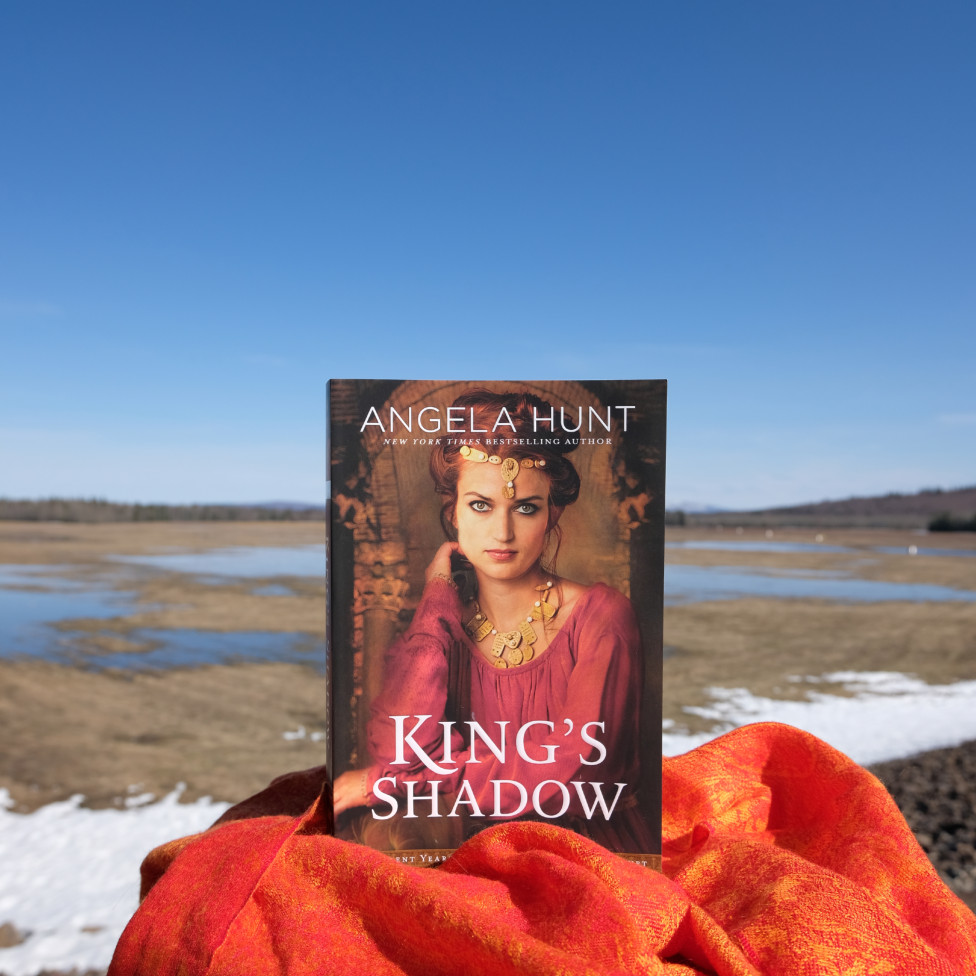
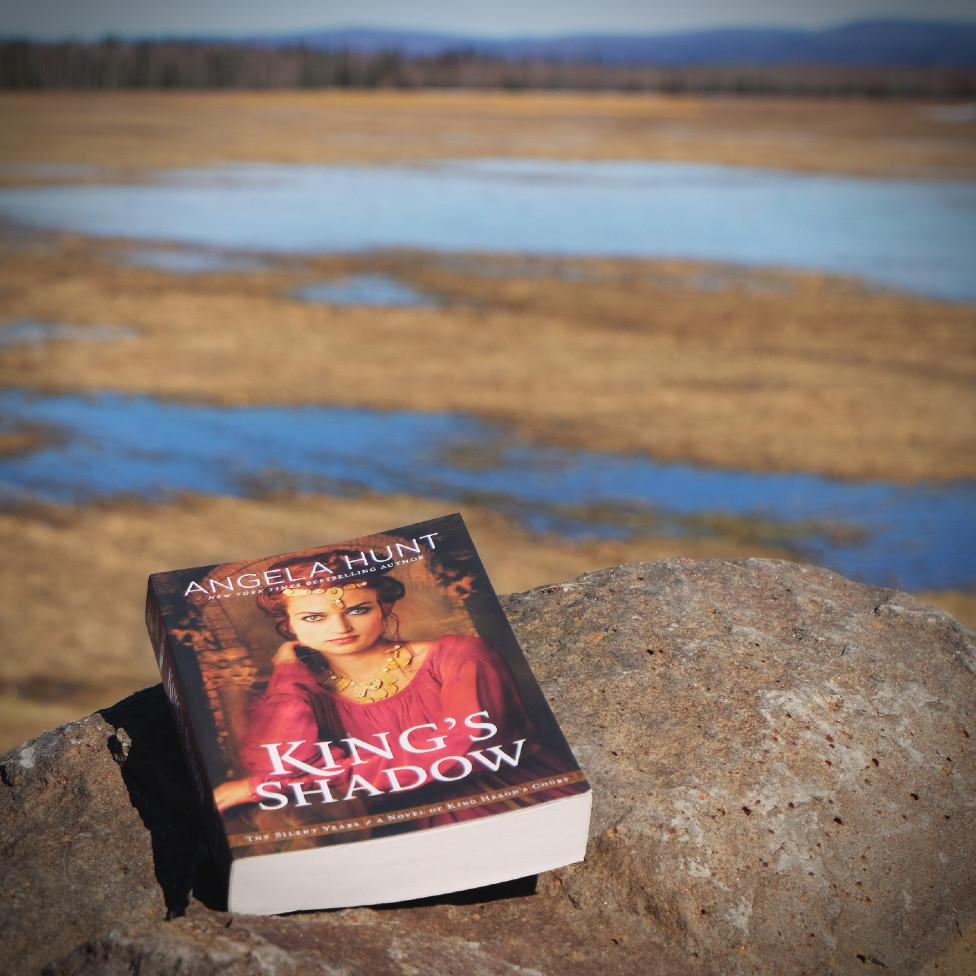
King’s Shadow by Angela Hunt

When you were a kid, did your mom ever make you watch history documentaries? You know the ones; maybe they were about the Civil War, or the Aztecs, or uncovering the secrets of Ancient Egyptians (seems as if new mummies are discovered every day). There was a deep voiced narrator who had perfected the art of sounding ominous, and interviews with at least one old guy who appeared to spend too much time locked away in a dusty museum basement. But the best parts of the film were when they would use actors to reenact historical moments in the background. You could watch Pharaoh so-and-so yell at underlings, lounge by the Nile, order a pizza, and ultimately die at the hands of some angry conspiring family member (okay, I made up the pizza part). If you’re like me, you ultimately found yourself surprisingly entertained. Fifteen years later, it’s not what you’d pick for movie night, but you still remember enjoying the learning process.  

I finished a book a while ago that reminded me of one of those films– King’s Shadow by Angela Hunt. Based on the events just before Christ, the story revolves around King Herod’s sister Salome and her fictionalized handmaid Zara. Since much of the unfolding drama in the book is drawn from true history of the time, the plot meanders around like ordinary life does. Real people rarely have stories that fit perfectly into the plot-writing standards you learned in high school English, with orderly climaxes and obvious overarching themes. For those reasons, I think Angela’s hands were tied, (pen and all) and the story tends to lack direction.

That said, King’s Shadow still did an amazing job breathing life into the years just before and up to Messiah’s birth. Christian fiction centered on the years of Jesus’ life are commonplace, but the time period for this book was unique–and set the stage in a way that helped me to better understand the cultural and political backdrop that followed. It documents Herod’s life through the eyes of a sister who is fiercely loyal, even as he slowly degenerates into the baby-killing monster we read about every Christmas. If you enjoy political intrigue, there is plenty of it here, even (or especially) within the royal family. Handmaid Zara is a quiet presence throughout, lending the viewpoint of a God-fearing and humble Jew.

Of course, I made the mistake of reading what turned out to be the fourth book in a series (!)– oops. Do I regret it? No. This book solidified my opinion that Angela Hunt’s best work is her historical fiction. Her research and rich writing style shine here, while the constraints of the timeline help her keep her characterizations and stories more believable (something I think she struggles with in some of her contemporary fiction, such as an earlier work, The Canopy). Not unlike those documentaries, I walked away feeling as if I knew the time period and the motivations of its main players better, but lacking deep emotional attachment to the story or practical application to my own life. For those pros and cons, I gave the book 3/5 stars.  

Do you like documentaries? Who are your historical inspirations? As always, I love hearing from you.

Biblical · Full Reviews

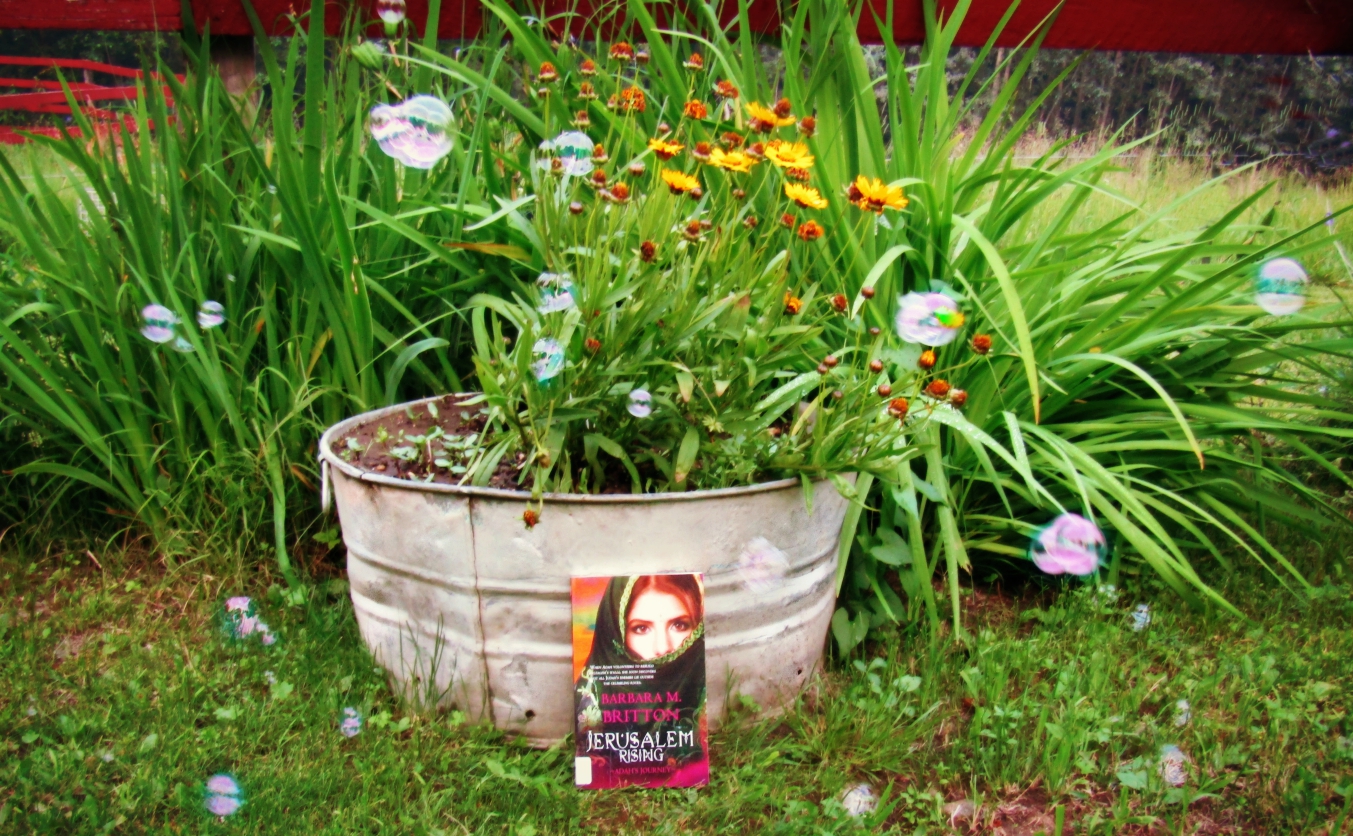
Full Review of Jerusalem Rising: Adah’s Journey

What should I say about Jerusalem Rising: Adah’s Journey by Barbara M. Britton? My thoughts about this book have been tumbling around in my mind for some time now, as you can ascertain by the late summer setting of the cover photo!

I first discovered Adah’s Journey when I was processing some new library books to be moved over to our regular fiction section; it’s a small book, and the unknown author and publishing imprint (Harbourlight Books) held my interest. It promised the imagined story of Adah bat Shallum, one of the unnamed daughters recorded as rebuilding the wall of Jerusalem with their father in Nehemiah chapter three. Having no brothers, Adah steps forward and volunteers as a laborer in an act of faith in God as well as a desire to see her father’s name honored and remembered in Nehemiah’s records. Of course, rebuilding the wall is a smooth, peaceful process, right? Wrong, as anyone who’s read the book of Nehemiah knows! Challenges present themselves and Adah plays a role in helping overcome many of them.

Truthfully, this story has what I would call an “unfinished” quality; I felt as if I was reading an excellent second draft that still needed a round or two of polishing. To be fair, most of the problems were small—a number of typos and grammar errors that could have been easily fixed, for example. One fairly substantial character was barely developed and had an unlikely/weak backstory. Even the cover of this book feels underwhelming to me, as if the publishers could have given it a professional finish but perhaps didn’t have the budget. The romances were Hallmark movie style, so expect the characters to experience lots of heart fluttering… and yearnings… and tingly sensations…

All that said, if you’re looking for a lighter, shorter read about a young woman trying to more actively trust God, this may be just the book for you. If you relish a sensory experience, like me, you may also take joy in Adah’s talent as a perfumer– as the different oils and herbs are pleasantly mingled and described throughout the story.  3/5 Stars.

Biblical · Full Reviews

Full Review, In the Field of Grace

I really had no intention of reading another Tessa Afshar book so soon! Back in January I reviewed Land of Silence; besides that, I have an ever-growing pile of works by unknown (to me) authors begging to be given a little time. But In the Field of Grace popped up in the audio book section of the library, and I gave in. I haven’t had a good audio book in a while… I can listen with my phone using free services like Hoopla, but lately I’ve been struggling to keep my phone charged. For that reason alone I tend to prefer audio books on CD rather than digital format. Someday I’ll get around to buying a charging cable for my car…

In the Field of Grace, ©2014 by Tessa Afshar, Moody Publishers.

In the Field of Grace is a retelling of the story of Ruth (from the Biblical book of the same name) with imagined details filling in the areas of her life we don’t know from Scripture. Afshar conjectures what Ruth’s Moabite backstory may have been like; considers her daily life in Israel; explores her relationship with Naomi.

The difficulty in writing this book, in my mind, is that I think most Christian women have read and heard the Old Testament passage preached so many times that they have already imagined for themselves many of the unknown particulars of the account. Challenging those interpretations makes it difficult for them to feel as if this could be how it “really happened.”

Afshar does a wonderful job, as usual, of painting with words a vivid world, but somehow it felt disconnected from the Biblical account to me. Maybe it’s the aforementioned problem (though I tried to have an open mind.) Mostly, however, I thought the romance between Ruth and Boaz was exaggerated and modernized in a way that somewhat cheapened the known Biblical narrative (which I’m sure was not Afshar’s intent). By way of example, in this fictionalization Boaz is instantly enamored with Ruth’s beauty upon first sight. Her eyes, her height… I actually rolled my eyes when he notices her long slender fingers (which are covered in dirt from working in the fields all day but still manage to be alluring!) Despite Afshar’s efforts to show that Boaz is a Godly man of character, the over-romanticizing detracted from Boaz’s words of blessing a few minutes later. This is because it felt as if he only showed her kindness, in large part, because she was so attractive to him. Would the wealthy landowner have shown the same generosity if she had not been beautiful, or was just too dirty, tired, and gaunt for him to notice her lovely features? Something in my gut tells me the real Boaz would have.

Ruth’s life also takes on a more precarious nature . She is nearly killed by thieves; struck down with heat stroke in the fields; is burned and suffers from smoke inhalation after beating back a fire in Boaz’s field alone; and… well, I’d better stop before I give away crucial spoilers. I wouldn’t mind the suspense if I wasn’t left wondering if most of the excitement was set up just so Boaz would have a couple opportunities to carry Ruth home in his arms, trembling with concern and hidden ardor.

But wait! Despite some of the issues I take with the book, I really don’t mean this to be a scathing review. I’m rating this 3 stars–lower than Land of Silence or Bread of Angels–but I wouldn’t say it’s devoid of merit. In keeping with Afshar’s signature style, there are plenty of moments of spiritual reflection throughout the book that are thoughtful and encouraging, so if you’ve enjoyed her other titles you will find similar here. I also particularly liked Afshar’s rendering of Ruth’s background in Moab as well as her relationship with Naomi.

In closing, have you read any other books based on the life of Ruth? Also, what are your favorite verses from the Biblical account?


Biblical · Full Reviews

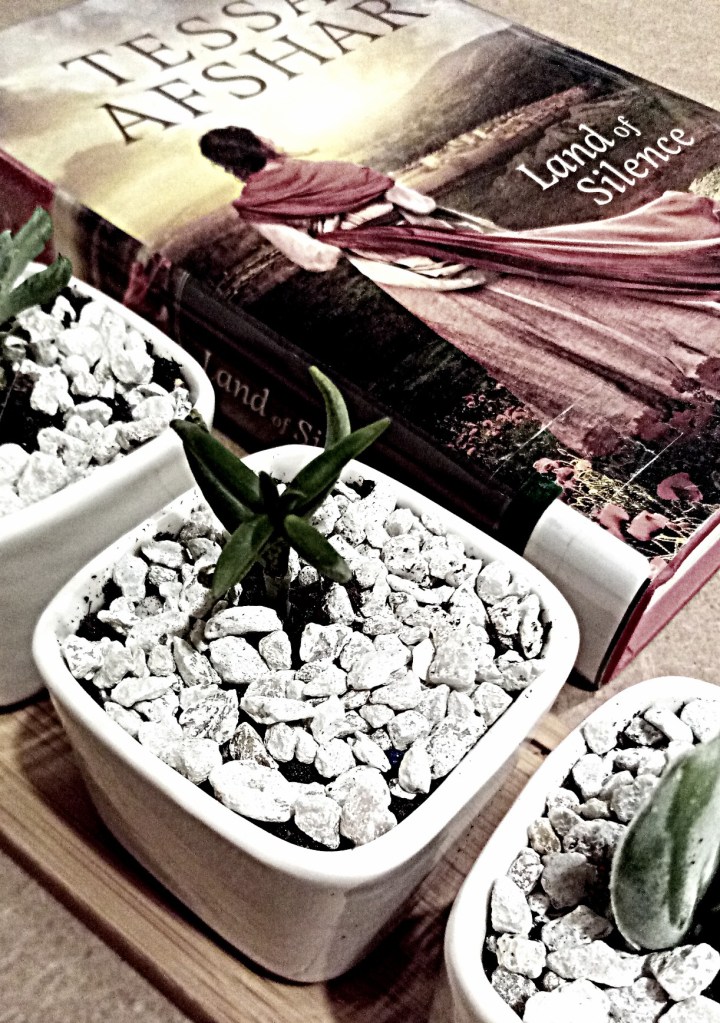
Full Review, Land of Silence

LandofSilence1

Close your eyes for a moment… (not too long, or you won’t be able to read this post!)

You’re me. You’re at work at the library. The automated materials handler (a.k.a. the book sorting machine) is humming and spitting books into different bins behind you; someone’s mom is reading aloud in the children’s area; coworkers in sweaters and cardigans answer the telephone at the help desk in a professional tone.

You just received the daily delivery from our sister library in Fairbanks… and opened the lid of one box full of brand new shiny books. If this didn’t already happen every week (and you didn’t have to wonder about little details like shelf space) you might expect some angelic music to fly out when that box opens. Or confetti. With sparkles!

Of course you’re only a little surprised when Land of Silence by Tessa Afshar makes its way out of the box– after all, your ARE the one who requested it for purchase… Continue reading “Full Review, Land of Silence”

Biblical · Full Reviews

Full Review, Take This Cup


The last jar remained to be opened. I plucked at the red wax seal and pried the lid off, welcoming the whoosh of ancient air. I peered in. This time there was no scroll, but a fleece wrapped package.

“Rabbi Kagba. It’s not like the others,” I said, some nervousness returning.

“Fetch it out, boy. My hand is too large.”

Reaching in elbow-deep, I grasped the prize and brought it into the light. Beneath thick wrapping, with smooth leather on the outside and fleece on the inside, I felt something the size and shape of a cup. Three strands of knotted leather bound the hide to it. On the exterior of the skin the label read, BEHOLD THE SILVER CUP OF JOSEPH, SON OF JACOB, PRINCE OF EGYPT.

Take This Cup
By Bodie and Brock Thoene
Zondervan, ©2014
Rating: 3/5 Stars

Continue reading “Full Review, Take This Cup”

Biblical · Full Reviews

Full Review, Bread of Angels

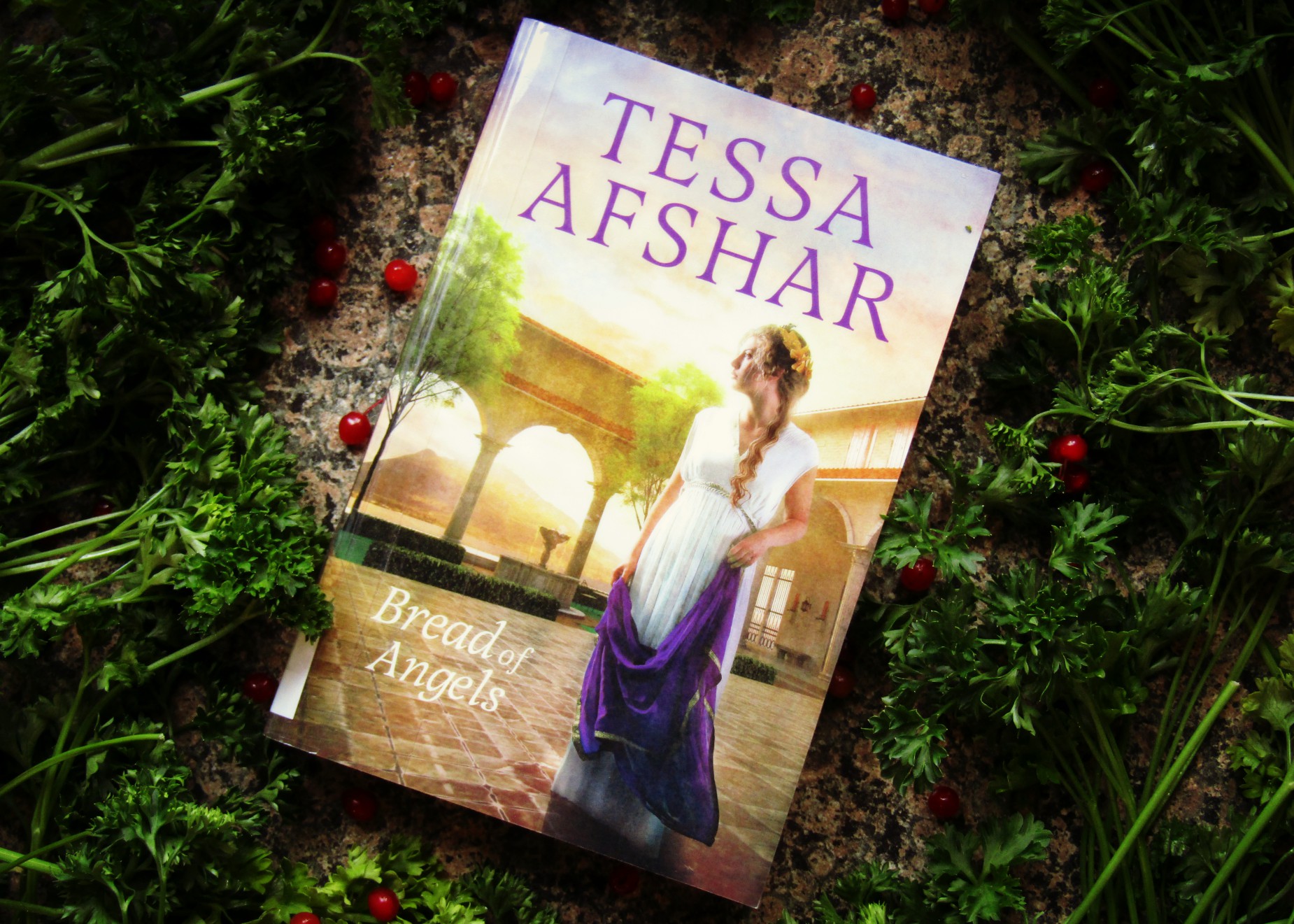
BOA1

“Like her grandparents, her parents had managed to bring only one child into this world, another daughter. And now it was Lydia’s turn to fight for this last piece of her family’s inheritance, this tiny patch of land that represented everything good and safe and noble in this world. Home and her father and purple. Lydia was content if the world had nothing else to offer.”

Continue reading “Full Review, Bread of Angels”

Biblical · Full Reviews

Full Review, Counted With the Stars

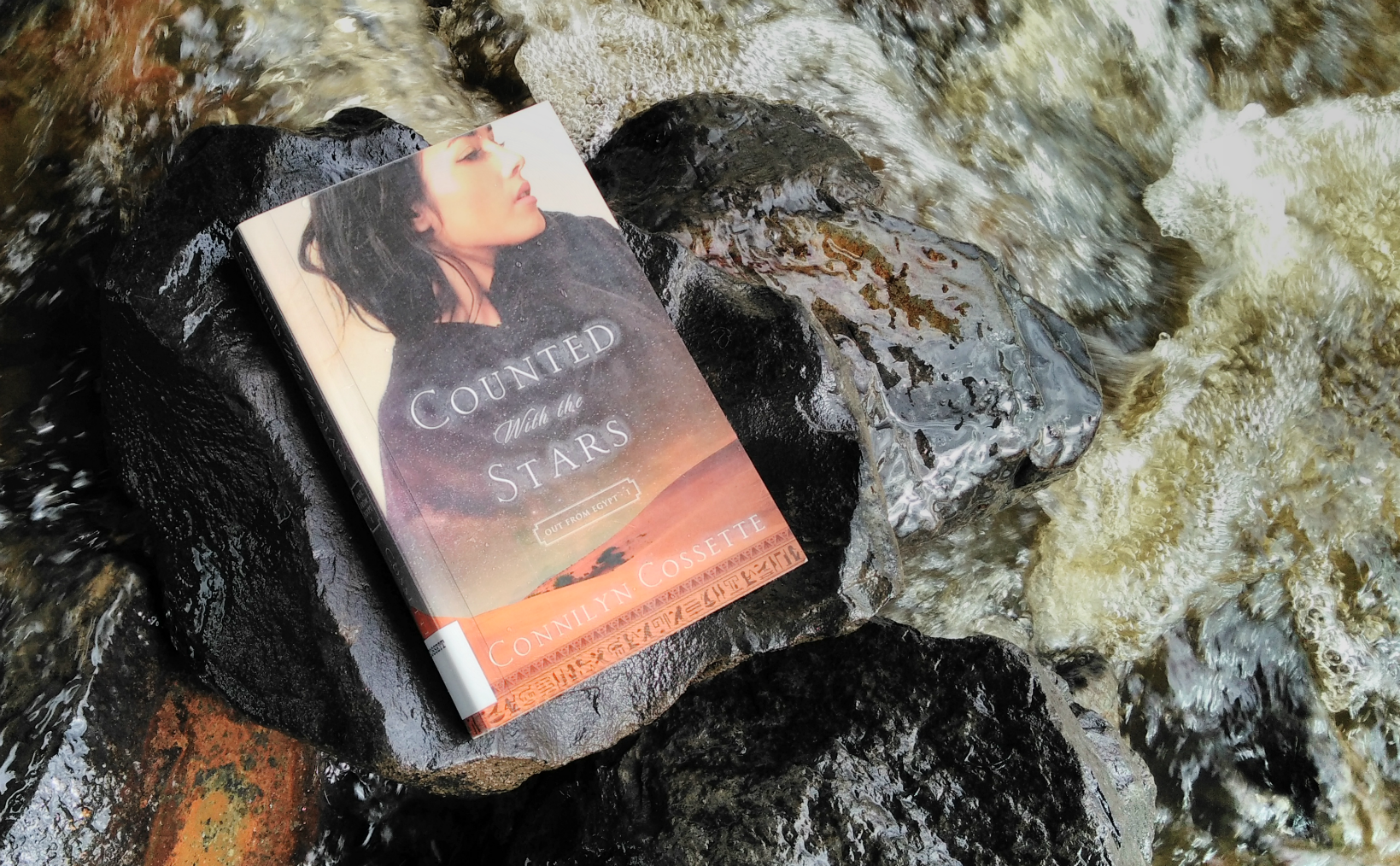
Countedwithstars2
Counted With the Stars
Connilyn Cossette
Bethany House Publishers, ©2016

Had Yahweh been calling to me? Without words? Had he guided my steps to be among his people? To be set free from bondage and to follow him into the wilderness for some purpose I did not yet understand? Perhaps even the dream that had plagued me after the Nile turned red, when the gods themselves bled, was a message that Yahweh would destroy their power.

My heart contracted as I imagined the possibilities. Did Yahweh, the Almighty Creator, hear me? An Egyptian slave? Even though I had refused to surrender to him?

I dipped my toes back into the cool, rich waters of the Nile with another foray into the world of ancient Egypt! The biblical tale of Moses and the Exodus is lush with meaning to be gleaned about our Redeemer, so it’s not surprising to me that it has inspired more than one novel. Counted With the Stars is written from a fresh perspective; the protagonist is an Egyptian (rather than a Hebrew) fearful for herself and her people as the plagues unfold.

Kiya, the main character, grew up with riches but was sold into slavery when her family becomes unexpectedly destitute. She forms a close friendship with a fellow Hebrew slave, who tells her the stories of their people and Yahweh’s covenant with Abraham and his descendants (see Genesis 15.) Eventually Kiya flees Egypt with the Hebrews and must decide if she will surrender her life to the same God who decimated her homeland.

There were some issues; in my mind there was a strong disconnect between the first and second halves of the book. Excellent characters, who had been built up and fleshed out, disappear without a satisfying ending when Kiya leaves Egypt . New characters (particularly a villain) pop up out of nowhere and seem cliché by comparison. I also thought the romantic arc between Kiya and her Hebrew love interest was unrealistic and their dialog too contemporary. “Eben” spends most of the book glaring at Kiya and treating her with contempt and for some reason she continues to find him all the more appealing. Eben’s behavior is explained to be due to his father being murdered by Egyptians, but I still don’t understand Kiya’s attraction.

Cossette does an excellent job expounding on the plagues and miracles of God; I especially found her interpretation of the parting of the Red Sea interesting. She imagines the strong east wind God sends to divide the waters (Exodus 14:21) to be very cold, and it freezes the waters on each side of the dry ground into the walls on their right and left. One of my favorite things about Biblical fiction is how it has me constantly reaching for my Bible to reread passages; to me, Exodus 15:8, which speaks of the water being “gathered together…the depths congealed” doesn’t suggest icy walls, but I don’t think it is firmly exclusive of it. Cossette makes it very clear the parting is a miracle of God and not simply a natural phenomenon!

All in all, I think Counted With the Stars earned itself a solid 3/5 rating. Parting thought—are you tired of Biblical Christian fiction? Are there any genres you are really interested in seeing me review? I recently purchased a mystery, which is supposed to be like a Christian version of Agatha Christie. I also may be getting started on some speculative works. What do you want to see most? Suspense, legal, mystery, apocalyptic? Something else?

Appreciatively, Rebekah