Full Reviews · Historical

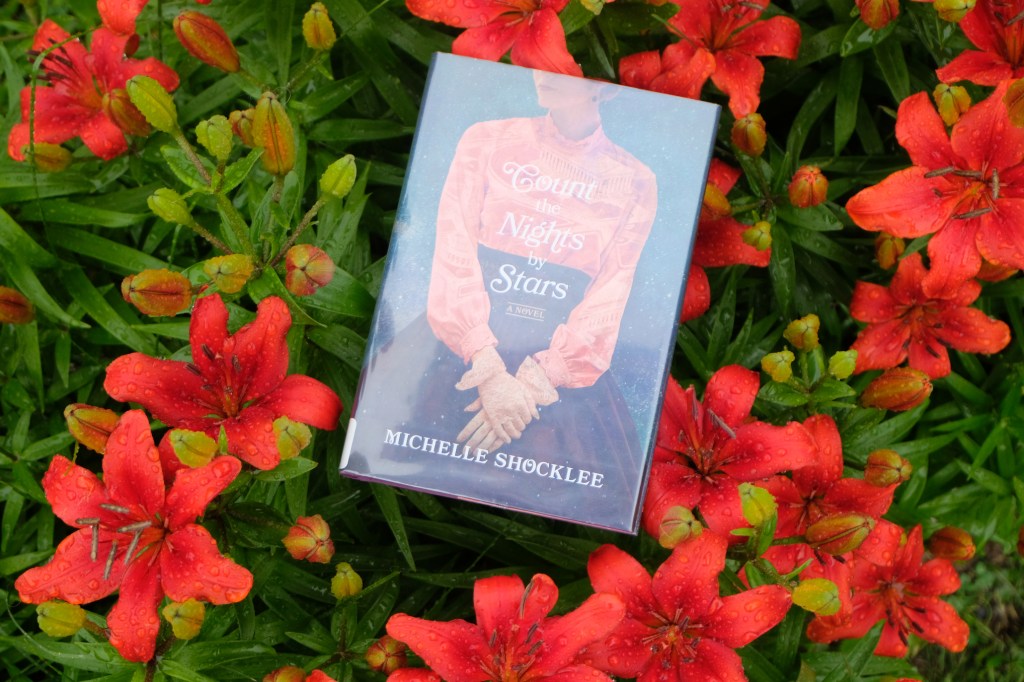
Full Review, Count the Nights by Stars

In my last post, I said that I planned to look into other books by Michelle Shocklee after being so taken with Appalachian Song. I’ve certainly done so– since then I’ve finished two more and started a third! If you haven’t heard about this relatively new name in Tyndale, she’s worth looking into at the local library or bookstore. I would be especially likely to mention her to someone who loves Cathy Gohlke, as the writing style feels similar to me.

Count the Nights by Stars is a dual timeline story centered around the lives of Priscilla and Audrey–one a young woman living in 1897, the other coming of age in the early 1960s. Each has ties to a famous Nashville, Tennessee hotel called Maxwell House. Sound familiar? It’s the real-life namesake of Maxwell House Coffee. (“Good to the last drop!“) The choice of setting was masterful on Michelle’s part– the hotel is a fascinating location, saturated with colorful history and events from which she could easily propel her story.

Priscilla visits the Maxwell with her family just before the turn of the Century, when Nashville is brimming with all the excitement of the Tennessee Centennial Exposition. I relished being whisked away into the wonder of this incredible event… 200 acres of discovery, with everything from a literal recreation of the Parthenon to a giant steel see-saw ride that fit 20 people at a time and propelled you several hundred feet into the air!

In the 1960s, Audrey gathers clues from Priscilla’s Centennial scrapbook and slowly pieces together what unfolded all those years before. Both young women are coming of age in their respective timelines; Audrey is maturing in how she views her autistic little brother and the death of her mother. Meanwhile, Priscilla’s eyes are opened to the need for Christ’s mercy and help to be extended to women trapped in the prostitution industry of her day.

While I really enjoyed both female leads, and adored the setting, the dialog and plot felt a bit stilted. Conversations, especially ones about faith topics, sometimes came across as unnatural to me. The storyline was somewhat simplistic, if solid. In some ways, I was reminded of old black and white films– the bad guy is overwhelmingly bad, the mother is spoiled and aggravating in an exaggerated way, and there’s a bit too much telling versus showing. But, like many classic movies, this book is also wholesome and warm. Since Count the Nights by Stars came out earlier than Appalachian Song, it’s possible that Shocklee just needed more time and practice to grow into her writing talent. If, somehow, she ever read this review, I’d hope she would take the criticism as constructive and know that I still think there is a lot in this book to praise.
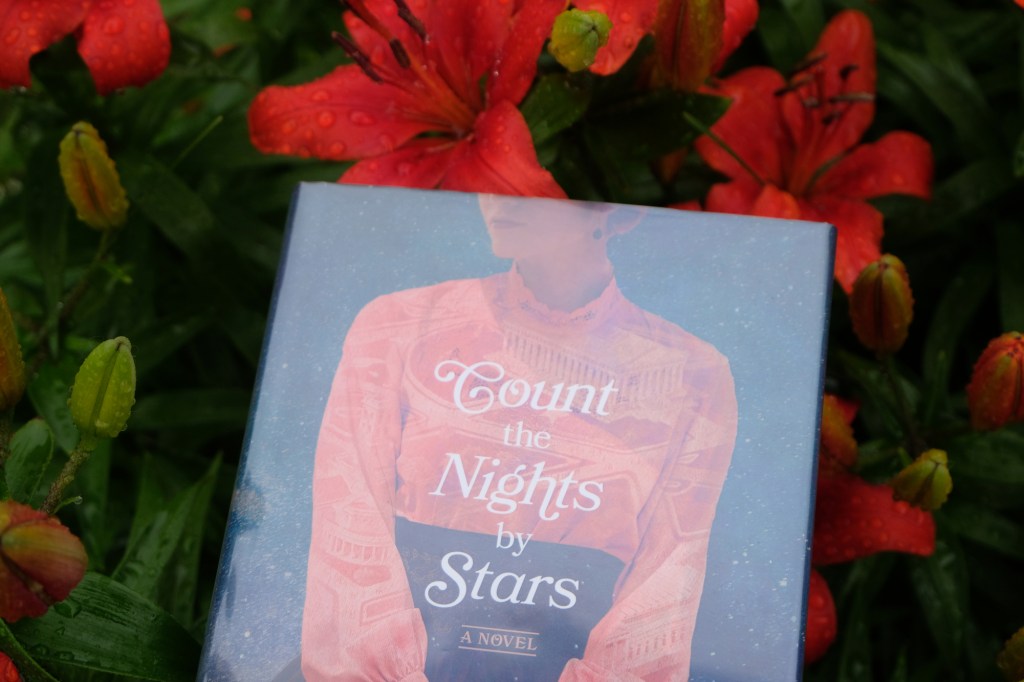
One last thought… what is up with all the similarly titled “star” books in Christian Fiction lately? I really can’t keep them straight anymore. There’s Counted with the Stars by Connilyn Cossette… Hidden among the Stars by Melanie Dobson… and I’m pretty sure both are Tyndale books, as well. If you’ve read this, tell me your opinion of the title and cover. Do you think they suit the novel?

God bless, and happy reading!
Full Reviews · Historical

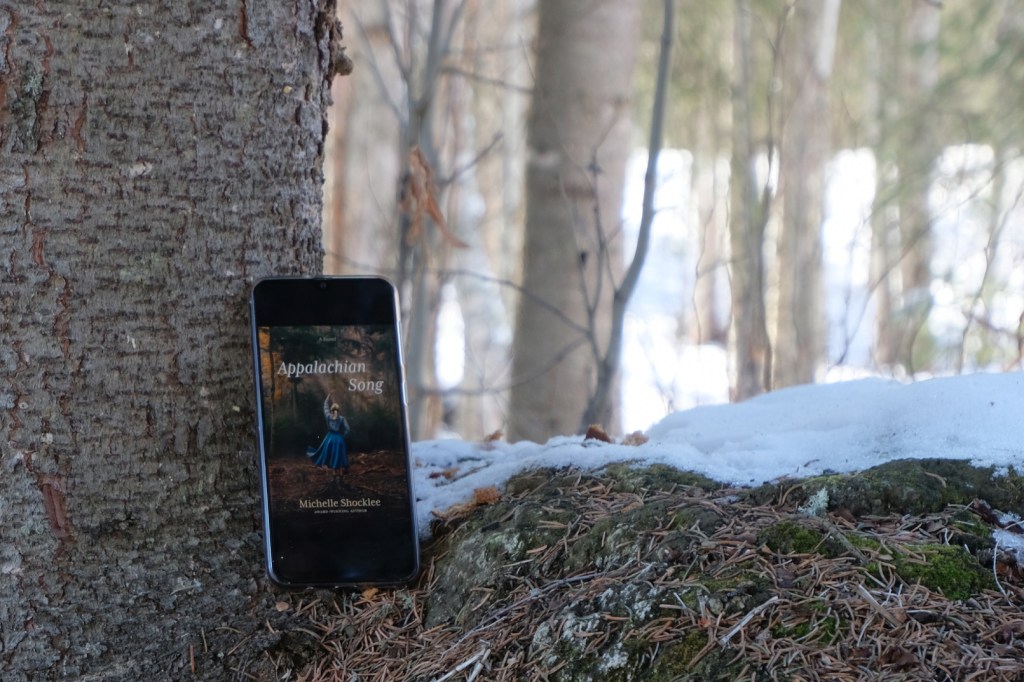
Appalachian Song by Michelle Shocklee

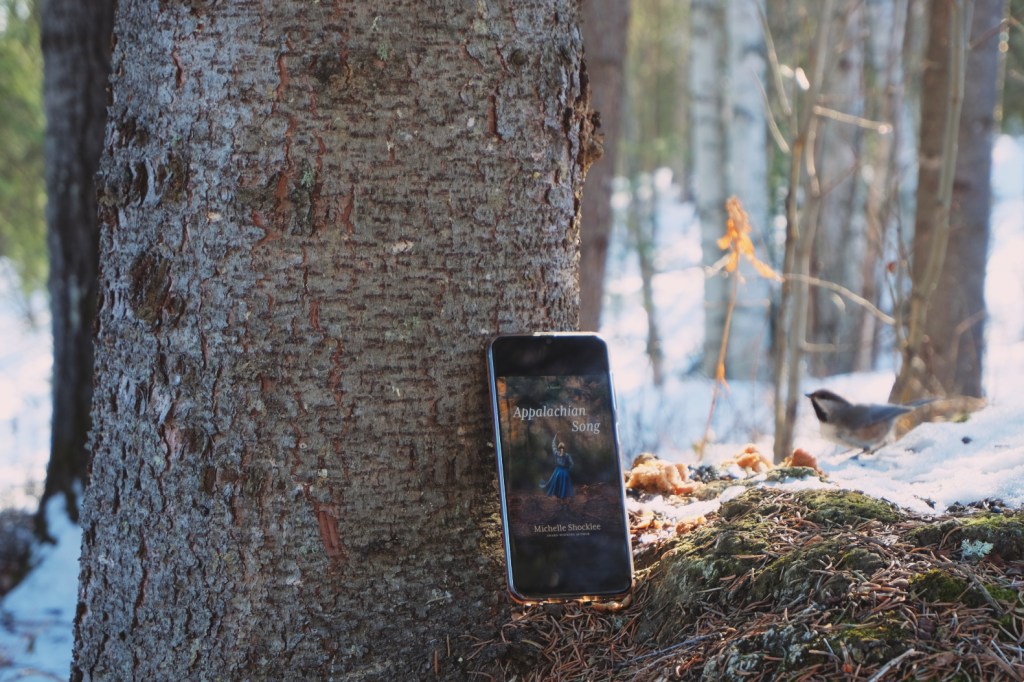
It’s a great feeling to discover a writer you didn’t know anything about and love that first book; I imagine it’s akin to finding the first gold nugget in a creek. You know you’ve got a treasure in your hands, as well as the tantalizing prospect of more to be found—maybe just around the corner! Somehow Michelle Shocklee flew under my radar until just recently, when I was drawn to the beautiful cover image for Appalachian Song and checked out the audiobook version from my library.

Appalachian Song is the story of a young pregnant girl who is taken in and cared for by a group of older spinster sisters. They live alone in a backwoods Tennessee cabin while the Second World War wages. Songbird, as the sisters lovingly call their little ward, is an utterly charming character who quickly wins the hearts of her new family. Even grumpy-but-practical sister Jenny, who reminds me a lot of Marilla Cuthbert (from Anne of Green Gables), warms under Songbird’s influence.

Flashing forward to the 70s, Country singer Walker Wylie tries to dig up the truth about where he came from, and what happened to his parents. I’m sure you can guess where this is going, but I enjoyed following along as the story unfolded, as there was a bit of mystery around what exactly had/would happen to Songbird and her baby.

Because some of the subject matter is more mature in nature, I would advise caution before giving this to younger readers. That said, the author handles topics like teen pregnancy with compassion and discretion. Bertie Jenkins, one of the sisters who cares for Songbird, is an especially memorable character; a midwife, Bertie becomes like a grandmother to her charge, as well as a spiritual mentor. Bertie beautifully shares the Gospel with Songbird as well as Biblical wisdom and encouragement. Even so, she’s every bit a product of her time and place, equal parts grit and practicality.   

I wish I could say I loved every character as much as Bertie (if I did, this would surely be a five-star review), but I never warmed up to Walker. I think if the author had mingled in some of his more positive character traits early on–alongside his frustration and anger over his recently discovered adoption– I would have been more sympathetic towards him. As it was, he came across as whiny and self-absorbed. Not so detrimental in itself–since he had a huge “about face” moment at the end– if not for an underlying romance thread throughout the book. I still don’t understand what exactly the girl fell in love with, since Walker mostly wallowed in angst the entire time. Just a few well-placed paragraphs of Walker charming everyone with a few guitar melodies, embracing farm life, or doing an occasional kindness would have really helped me root for him at his lows. Either that, or hold off on the romance till the end when he has a change of heart, and give a subtle hint that it’s in the cards so we all know he gets a happy ever after.

While I was also a bit unsatisfied with the ending written for Songbird (I didn’t feel like it made sense for her character, but I can’t say why due to spoilers), I won’t deny this book left me with a lot of good feelings. One of my favorite verses, Psalm 90 verse 2 says, “Before the mountains were brought forth, or ever You had formed the earth and the world, even from everlasting to everlasting, You are God.” I hope you will meander through the Appalachians as well and leave with the same sense of warmth, dwelling on our everlasting Creator.

Full Reviews · Historical

Full Review, Stories That Bind Us

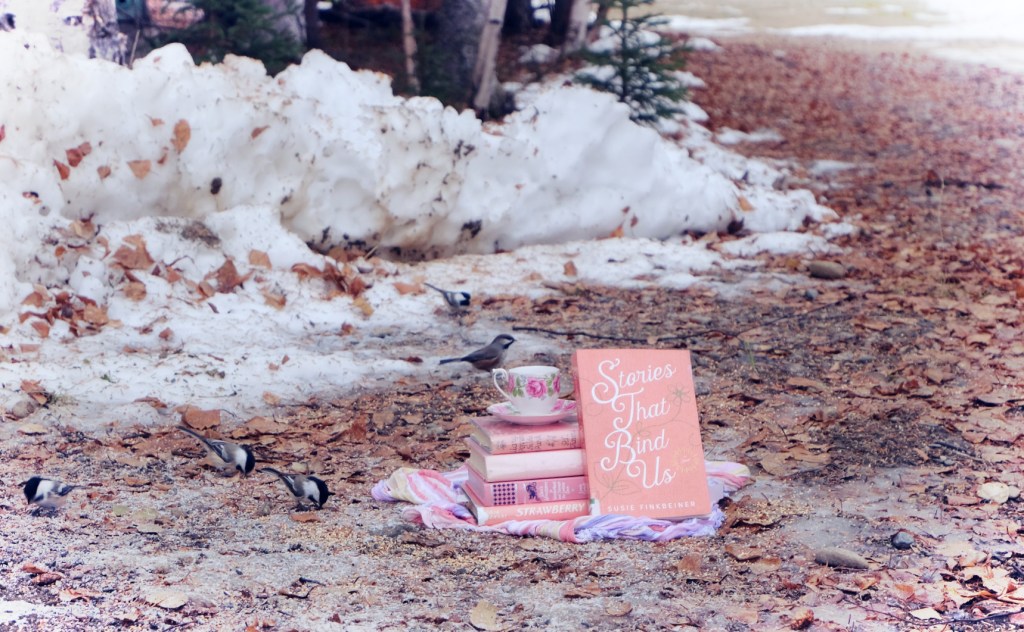
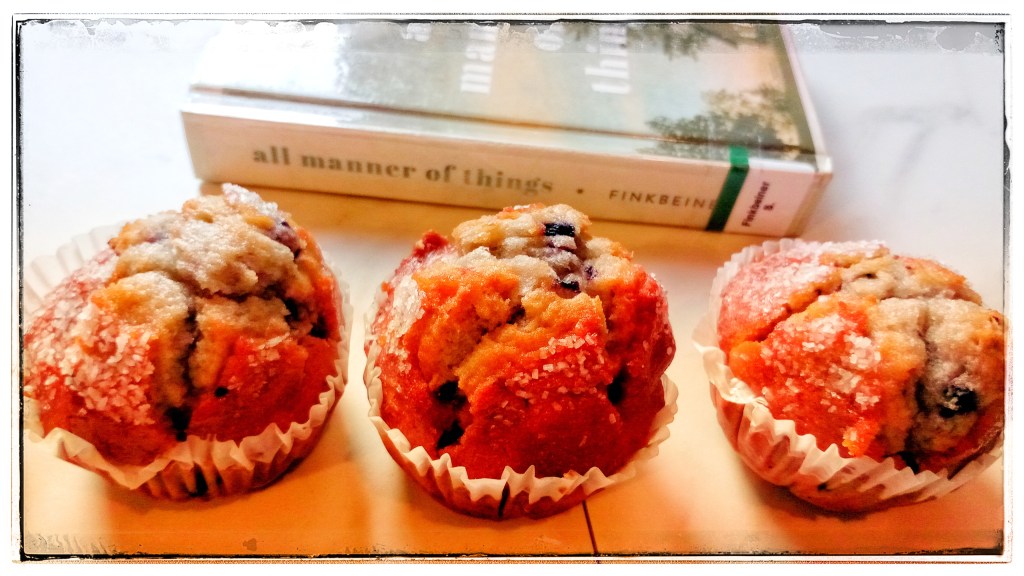
Let’s hope that I don’t end up with a bill for damages to this library book… I may have realized too late that snow was melting through the scarf I had used as a safe spot to nestle my stack. Oops! Of course, if I absolutely must pay a damages bill now and again, I’d be pleased to be paying for a book like Stories That Bind Us. If the library decides to replace the copy, I can keep the one I paid for (and I would love to add another Susie Finkbeiner book to my collection).

“Books are for the birds.”

Susie Finkbeiner may sound familiar if you remember my review of her other title, All Manner of Things, one of my favorite Christian fiction reads ever. Stories That Bind Us is the meandering tale of Betty Sweet, a middle aged woman who finds herself suddenly widowed. Living in the 1960s, Betty is barely past the early stages of grief when she finds herself unexpectedly the caretaker of her kindergarten-age nephew. I could use flowery phrases to describe this book, such as “a contemplation on loss” or “a compassionate look at mental health” and insert some words like reflective and poignant. All of those would be apt, but I think it would be simpler to say that Stories That Bind Us is not action-oriented or tightly paced. It is a thoughtful, warm, and absorbing book chronicling Betty’s healing process, day to day life in the ’60s, and the growing love between a caring aunt and a hurting little boy.

Betty has a wonderful imagination, and concocts many fanciful tales to comfort and entertain her young charge, Hugo. Many of them are told in full within the pages of the novel, so if you like children’s stories, this may be the book for you. That said, little here is cloying– Betty deals with loss as well as the responsibility of seeking help for her mentally ill sister (Hugo’s mother). As I read, I found myself wishing our protagonist was more involved in her sister’s care and the doctors’ treatment choices, but I do think the way it is written is probably realistic for the time. I don’t think mental illness was understood or approached then in the same way it might be today. Like All Manner of Things, I wished that Scripture was a bigger anchor to the story and its message, but the tone was hopeful. The ending was happy, in many ways, but somehow felt… unfinished, or unsatisfying. I really can’t say more without giving away too much.

Overall my rating is a solid 3/5 stars. While acknowledging a few flaws, there is something so utterly… delightful about Susie’s style and characterization I could easily be convinced to sneak out an extra star if pressed! This book makes me feel like snuggling up with a blankie and double chocolate chip cookies to ease me through the sad parts. Not that I’d turn down double chocolate chip cookies with any book! But somehow I think they’d taste better… with the Stories That Bind Us.

Biblical · Full Reviews · Historical

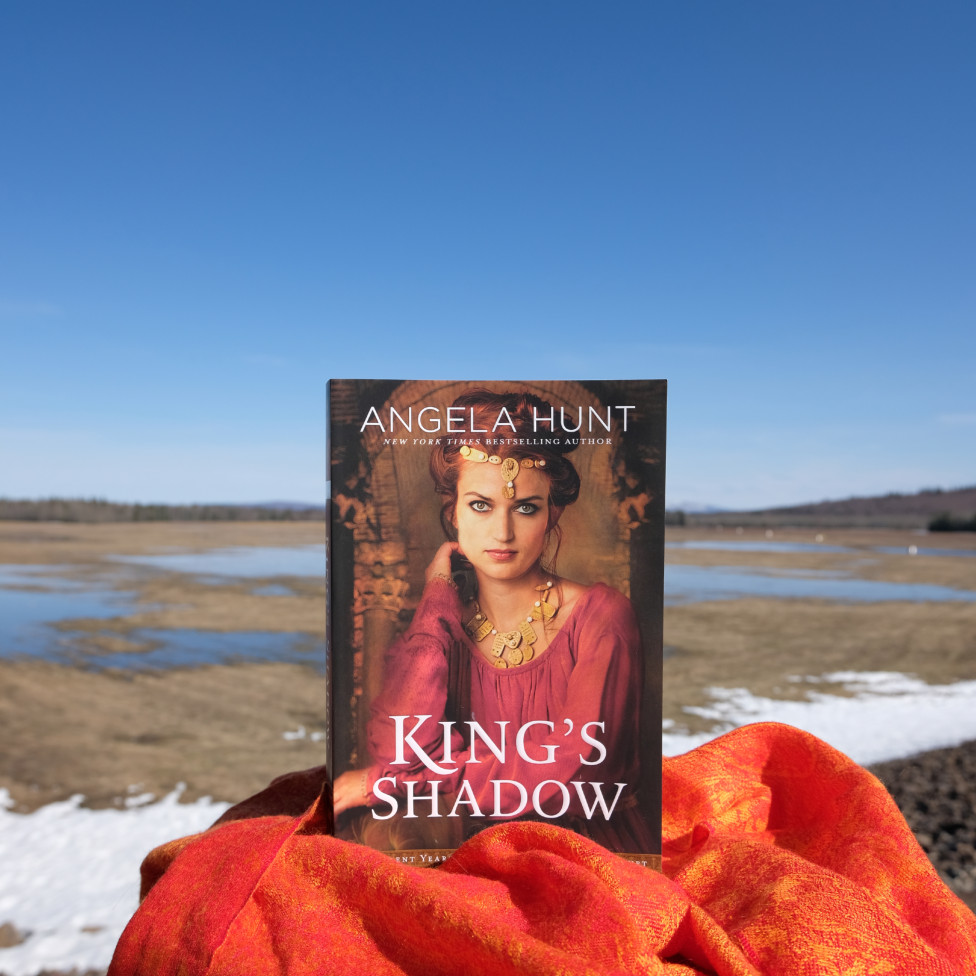
King’s Shadow by Angela Hunt

When you were a kid, did your mom ever make you watch history documentaries? You know the ones; maybe they were about the Civil War, or the Aztecs, or uncovering the secrets of Ancient Egyptians (seems as if new mummies are discovered every day). There was a deep voiced narrator who had perfected the art of sounding ominous, and interviews with at least one old guy who appeared to spend too much time locked away in a dusty museum basement. But the best parts of the film were when they would use actors to reenact historical moments in the background. You could watch Pharaoh so-and-so yell at underlings, lounge by the Nile, order a pizza, and ultimately die at the hands of some angry conspiring family member (okay, I made up the pizza part). If you’re like me, you ultimately found yourself surprisingly entertained. Fifteen years later, it’s not what you’d pick for movie night, but you still remember enjoying the learning process.  

I finished a book a while ago that reminded me of one of those films– King’s Shadow by Angela Hunt. Based on the events just before Christ, the story revolves around King Herod’s sister Salome and her fictionalized handmaid Zara. Since much of the unfolding drama in the book is drawn from true history of the time, the plot meanders around like ordinary life does. Real people rarely have stories that fit perfectly into the plot-writing standards you learned in high school English, with orderly climaxes and obvious overarching themes. For those reasons, I think Angela’s hands were tied, (pen and all) and the story tends to lack direction.

That said, King’s Shadow still did an amazing job breathing life into the years just before and up to Messiah’s birth. Christian fiction centered on the years of Jesus’ life are commonplace, but the time period for this book was unique–and set the stage in a way that helped me to better understand the cultural and political backdrop that followed. It documents Herod’s life through the eyes of a sister who is fiercely loyal, even as he slowly degenerates into the baby-killing monster we read about every Christmas. If you enjoy political intrigue, there is plenty of it here, even (or especially) within the royal family. Handmaid Zara is a quiet presence throughout, lending the viewpoint of a God-fearing and humble Jew.

Of course, I made the mistake of reading what turned out to be the fourth book in a series (!)– oops. Do I regret it? No. This book solidified my opinion that Angela Hunt’s best work is her historical fiction. Her research and rich writing style shine here, while the constraints of the timeline help her keep her characterizations and stories more believable (something I think she struggles with in some of her contemporary fiction, such as an earlier work, The Canopy). Not unlike those documentaries, I walked away feeling as if I knew the time period and the motivations of its main players better, but lacking deep emotional attachment to the story or practical application to my own life. For those pros and cons, I gave the book 3/5 stars.  

Do you like documentaries? Who are your historical inspirations? As always, I love hearing from you.

Full Reviews · Historical

Full Review: All Manner of Things, by Susie Finkbeiner

When I took a pre-reading peek at other reviews of All Manner of Things by Susie Finkbeiner, I saw a repetitive comment– “It’s so unique to read historical fiction set during the Vietnam War years!” I won’t talk at length about this aspect of the book, then, since it’s been said before. However, having read a decent helping of historical fiction lately, it is refreshing to see a change from the very common settings of WWII or the American Civil War. The 1960s weren’t all that long ago, so I felt a closeness to the story– after all, it’s the world my mom and dad were born into, with my older aunts and uncles already slipping into bell bottoms and pedal pushers.

All Manner of Things is a coming of age story. Annie Jacobson is on the cusp of full-fledged womanhood, and the novel follows her as she navigates small town life on the edge of Chippewa Lake, Michigan. Already a mature and responsible young lady, she watches her brother enlist as an army medic; works a job as a waitress; and struggles to handle gracefully the return of her father, who abandoned her family twelve years prior. The characters in this book are so alive I still miss them, still see them, as if they were real– and I rarely give out that type of compliment because it can so easily become cliche and hollow.

If you love stories in the vein of Little Women or the Penderwicks series by Jeanne Birdsall (not to be confused with the Penderwick Chronicles), you’ll love this book. Hardly fast-paced, it takes its time, but every moment washes over you like a gold-tinged happy memory or a softly faded polaroid photo. It’s warm and genuine, but not saccharine, infused with everyday happenings and nods to 1960’s pop culture.

I listened to this in audiobook format (downloading it through the library app Hoopla) and I highly recommend you do the same if at all possible! The narration by Tavia Gilbert was among the best I’ve ever listened to. I finished the entire 10+ hours of narration in under a week, which is a record for me.

Perhaps the most important point I can make about Susie Finkbeiner’s work here is that I feel it rides a fine line between “Christian Fiction” and what I would classify as “wholesome reading.” Remember when you were a little kid doing English assignments in school? One of the principal parts of story-telling you learn is that every story has some sort of conflict, be it external (e.g. I need to defeat the ogre to save the beautiful princess) or internal (e.g. I must put aside my cowardly nature for the first time in my life to face the ogre) or both. This is just my opinion, but if a book’s conflict isn’t driven or influenced or affected in some way by the character’s faith, relationship with God, or the Bible– then the religious elements are more a part of the setting than the story. To some degree I think that’s the case with All Manner of Things; Christianity is a part of the characters’ lives in the sense that you see them talking to someone at church or praying at dinner (and that’s certainly a good thing, don’t misunderstand me.) I just wish God had been portrayed as a little more personal, more influential, instead of feeling like an afterthought. I wish more questions had found their answers in God’s Word.

Did I still enjoy the book? Absolutely! Wrapping up this post with a 4/5 star rating.

I would mention to fellow readers that may be concerned about euphemisms that there are many uses of them in this novel (for example, golly or gosh.)

EDIT:

Oops! …this post was accidentally published a week early in addition to the planned post. I am going to leave it up, but will make a few changes and edits as I had not finished “cleaning up” the post and fixing grammar errors, etc. Also, there will be no new post for next week. Thanks!

Contemporary · Full Reviews · Historical

Full Review, Hidden Among the Stars

If absence truly makes the heart grow fonder, than you must be dearly fond of me by now, friends. How sweet, then, to be able to return to you inspired with new ideas for the blog–armed with possibilities and a number of summertime reads to share!

I’m all for a dessert-first attitude, so I wanted to come back with my absolute favorite book of this year. Hidden Among the Stars is the kind of book I started this blog to find; the kind of book I thought about during the day, and looked forward to enjoying when I got home in the same way I look forward to savoring my favorite comfort foods or lighting my favorite candle. I felt as if I could nestle into this book and its characters.

Written by Melanie Dobson, the book is a time-slip novel alternating between Nazi Austria (late 1930s) and a modern day America. Unlike many dual-plotline stories, I found myself equally invested in and enjoying both, at least until the very end… when I absolutely HAD to know how the past would unfold and finally have all my questions answered. The modern day protagonist owns a children’s bookstore with her sister (cue a surplus of snippets from classic children’s literature),and is trying to uncover the links between a family member’s puzzling origins and two mysterious vintage books. The past holds a musician, a wealthy young man, and a girl in love… plus a large dose of fascination. As if that wasn’t enough allure for one novel, Dobson skillfully set the stages in and around a lakeside castle.

How do you feel about unrequited love stories, readers? It isn’t usually to my taste; perhaps I just think there’s enough loneliness in the real world to invalidate ever wanting to put it into a work of fiction where a happily ever after would be as easy as writing in another “I love you.” There was a case of it in Hidden Among the Stars, but it was so perfectly juxtaposed against a few other romances in the novel that it seemed fitting. Younger readers should be cautioned that this book does deal with some heavy topics. As well as, or perhaps as a result of, the expected anti-semitism and cruelty of the period, a young woman is raped. 

While I generally try not to rely on other reviewers to put my feelings about a book into words, I think author Sandra Byrd put it perfectly when she said of Dobson’s work:

“A silver thread of the love-of-others entwines with a golden thread of the love-of-God, tying past and present storylines.”

These threads of Christian truth are woven in delicately and don’t begin to really sparkle until about half-way through. Patiently enjoy the beauty of this novel as you wait for them to emerge and add rich depth to an already lovely book. 5/5 Stars.

Full Reviews · Historical

Saving Amelie, Full Review

I’ve been busy, book friends—I’ve been on a trip to Germany! More than two weeks spent mostly in the little Bavarian village of Oberammergau. It’s a place where fragrant breakfast rolls and strudels warm your mouth and your heart… and the Alps reach up with snowy hands as if ready to catch the sky if it falls. This is the home of the Passion Play, which has been performed by the locals once a decade for over 350 years.

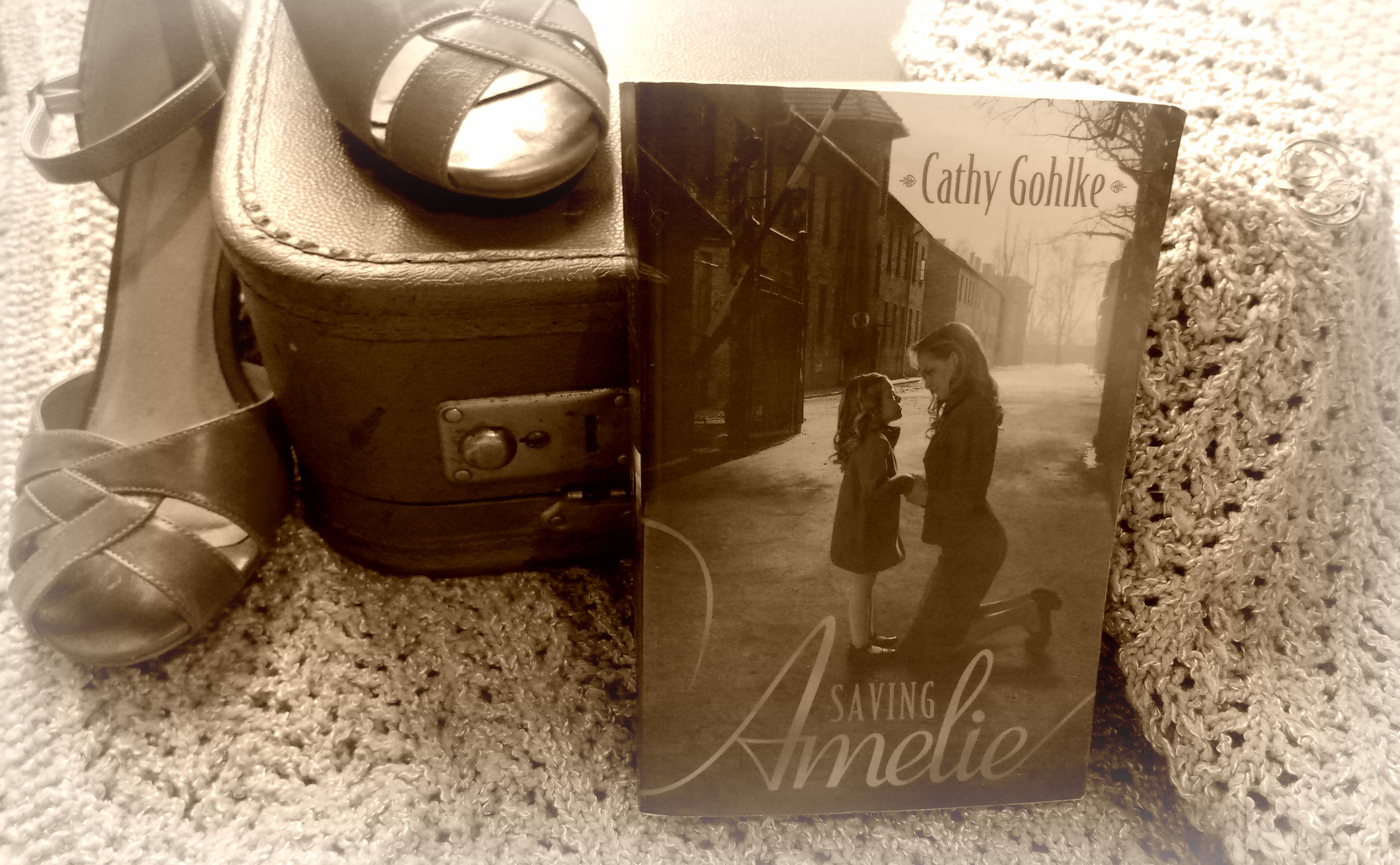
Of course, I haven’t been there literally; who has money to travel? I’ve been immersed in a WWII novel by Cathy Gohlke—Saving Amelie. If you’ve been following my blog for a while, you may remember it as one of the books in my bargain haul from Tyndale. $5 for a ticket back in time is certainly a fare I can afford!

Based on the back-cover summary, I initially thought that the story would be at least partly from the point of view of Kristine Schlick, a young mother unsure how to protect her deaf daughter. Married to an SS officer who views the little girl as a blight on his Aryan bloodline, Kristine is forced to turn to an old friend for help. Rachel Cramer, the true protagonist, steps in as a hesitant hero and escapes with Kristine’s child to the little village of Oberammergau. There, she deals with some shocking discoveries about her own past.

Rachel isn’t a gallant hero, despite the whirlwind of danger and deception she finds herself entrenched in. She’s somewhat selfish, a consequence of being raised in the affluent and prejudiced home of a eugenics scientist. Unable to stomach the depravity she comes face to face with among her father’s circle in Germany, Rachel takes a stand for morality… but remains reluctant to help others with their more mundane and down-to-earth needs.

There’s a romantic interest—Jason Young, an American journalist with resistance connections—as well as a whole host of other lovable characters. As both Rachel and Jason begin to understand Christ’s sacrifice for mankind, they also become more selfless… and this is where the core of the story lies, in what Gohlke emphasizes as “costly grace”—grace that requires a servant’s heart and a surrendering of your own desires.

Despite the hard realities of WWII, Gohlke manages to keep the book from becoming too gritty. She deftly paints the heartaches and struggles of her characters but manages quite a bit of good luck (or perhaps she would call it providence!) for them as well. One or two key plot lines seemed utterly far-fetched and unconvincing to me—ultimately hurting my rating of the book, which otherwise could have been a 5/5. That said, if you relish stories that feature undercover subterfuge or a mysterious underground resistance, you’ll probably still find yourself thoroughly enjoying Saving Amelie.

4/5

Full Reviews · Historical · Uncategorized

Full Review, While We’re Far Apart

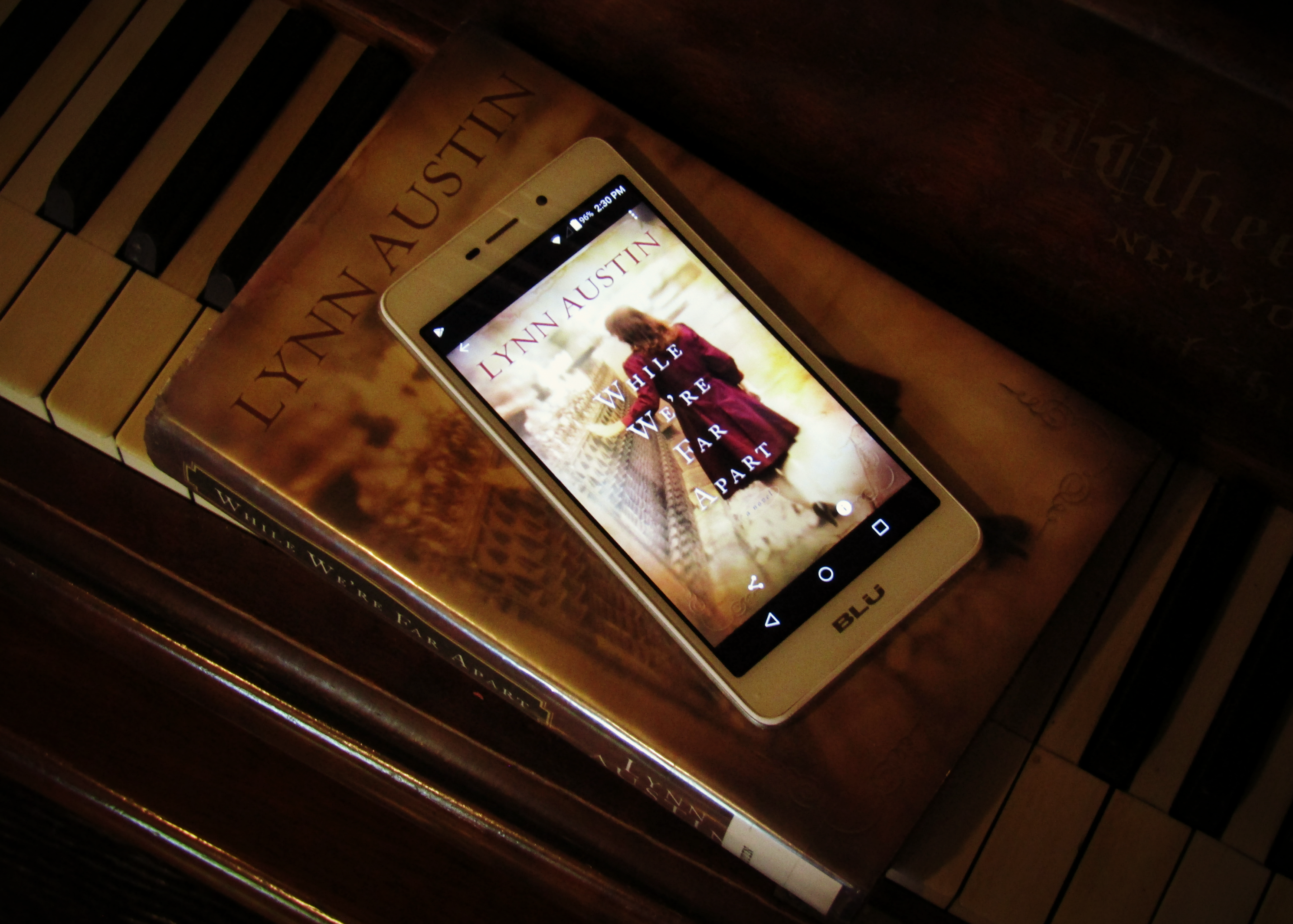
While We're Far Apart

“Don’t do it Eddie. Please,” Grandma begged. “Think of your children. Go down there tomorrow and tell the army you changed your mind.”

“I can’t. It’s too late.” He spoke so softly that Esther thought she might have imagined it. For sure Grandma hadn’t heard him. But then he cleared his throat and said in a louder voice, “I already resigned from my job. I leave for basic training in two weeks.”

His words gave Esther the same empty, floating feeling she’d had after Mama died, as if she were a fluff of dandelion, no longer tethered to the earth. What was going to happen to her?

While We’re Far Apart
By Lynn Austin
Bethany House Publishers, ©2010 Continue reading “Full Review, While We’re Far Apart”

Full Reviews · Historical

First Review!

IMG_20180218_112849

Cousin Albert held out his hand for the photograph. I swallowed and gave it to him. There were two letters in the envelope; one I knew to be Emily’s writing. I looked away. If the other was from Ma I couldn’t bear it. I’d prayed for a letter from her for nearly a year. That Cousin Albert should have both a letter and a photograph, when I had neither, made me hate him. And then I hated myself. What was I thinking, grudging a dying man the only air he wanted?

 I Have Seen Him in the Watchfires
By Cathy Gohlke
Moody Publishers, 2008

Continue reading “First Review!”