Biblical · Uncategorized

A Review, The Pharisee’s Wife

Janette Oke is a name well-known among Christian Fiction circles. Her books have graced a thousand bookshelves, passed between friends at church, and been treasured finds at thrift stores. Several of her works have birthed film adaptions, such as the Love Comes Softly movies and When Calls the Heart series. Perhaps it shouldn’t have been a surprise to me to see her most recent release at the library– The Pharisee’s Wife–but it was.

For one, Janette is no less than 90 years old! Always a bit of a skeptic, I remember scrutinizing the front, back, and inside covers looking for another author who must have co-written Oke’s vision and released it under her name. But as 2nd Corinthians 12:9 says, “My grace is sufficient for you, for My strength is made perfect in weakness.” I truly believe God worked through Janette’s years and enabled her to write, to my mind, her finest work.

In fairness, I haven’t read a great portion of the staggering 70+ novels Oke has penned. Speaking humbly–with respect for how much she contributed to the Christian Fiction genre–I didn’t connect with most of those I tried. The romances, in particular, often felt cliche and even a bit hammy to me… I’ll never forget one chapter from When Calls the Heart where the female protagonist faints dramatically and is predictably gathered up in the arms of the ever-ready handsome Mountie.

Whether we see eye to eye in that regard– adore Oke or nay– I hope you will give The Pharisee’s Wife an opportunity. The book reads as a different flavor of love story– a love story to the Gospel, a love story to God’s people waiting expectantly for Him to come again, and a love story to ordinary women. It connects you to the heart of a young girl during Jesus’ first coming, trying to make sense of everything she is hearing about the “teacher” both from his followers and from her Pharisee husband, who bitterly hates Him.

The Pharisee’s Wife is set in a completely different time and culture than Janette has typically written in all her life, yet it felt natural and well researched. Mary–the titular wife– isn’t “ahead of her time.” She doesn’t think or talk like a modern woman, and I find that refreshingly realistic. She’s little more than a child, raised in an insular, tiny village… naive, innocent, and unsophisticated. She’s also kind, discerning, and warmly endearing.

Mary “ties the knot” with a Pharisee–a total stranger–and in turn her family receives a dowry that will help her crippled father live a comfortable life. Her husband, Enos, is neither gentle nor generous. Thankfully (depending on how you look at it) he spends most of his marriage away from home, trying to make an end of Jesus.

The book isn’t without flaws. The book lost steam in the second half– and the ending in particular left me somewhat unsatisfied. There were hints at directions I thought the book was headed that never led to a conclusion (some characters in particular were left dangling). There was one scene where the Gospel is shared, and I remember noting it felt unnatural, somehow. While the Gospel certainly has not changed since Jesus first shared it– repentance and belief in the Messiah for forgiveness of sins– I doubt the earliest believers sounded like TV evangelists. Especially since Jesus hadn’t even died or risen yet, so their understanding of his teachings wasn’t “complete.” I wished that Jesus’ actual words had been quoted.

That said, after reading the Note from the Author at the end of the book, I had a newfound respect even for some of the plot points I would have preferred to tweak. Janette intentionally left the ending a bit anticlimactic, pointing forward to Christ’s return, “for the climax of God’s great plan is still in the future.” Some of her character arcs made more sense when she explained that she wished to remind readers that “…it is not always the person we would choose as worthy who makes the important decision of becoming a believer. God has given each individual free will. We deeply grieve over those we love who do not choose to repent and believe. At other times, one whom we see as the greatest sinner does seek forgiveness and God responds in mercy.” While imperfect (as all books are besides our Heavenly Father’s), The Pharisee’s Wife left me with spiritual food to chew on and ultimately honored our Lord. I commend the author for this thoughtful story and her prayer, with which I will close:

“To you who hold this book in your hands, no matter the time or your circumstances, may you know that I have prayed for you, that in some way, as only God through his Spirit can do, your heart may be touched to meet whatever is your present, personal need.”
Full Reviews · Historical

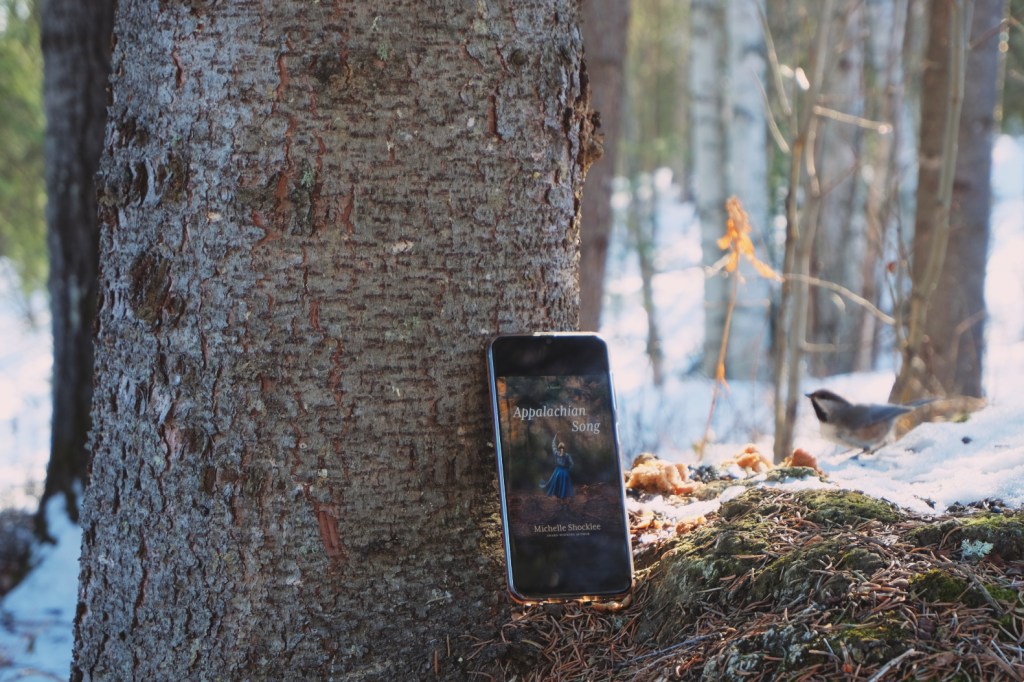
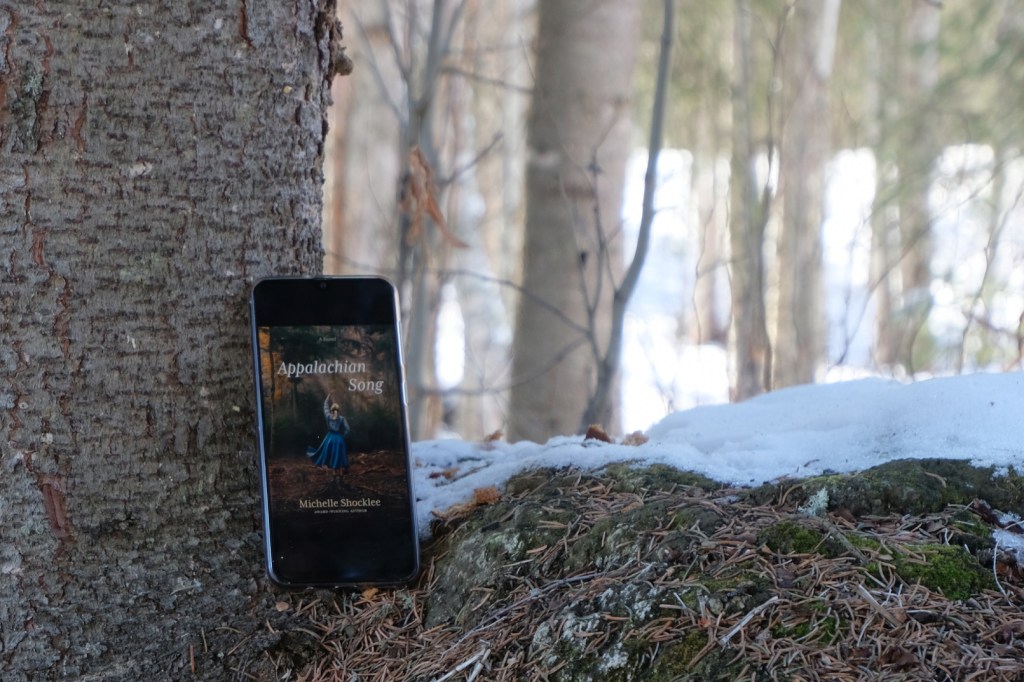
Appalachian Song by Michelle Shocklee

It’s a great feeling to discover a writer you didn’t know anything about and love that first book; I imagine it’s akin to finding the first gold nugget in a creek. You know you’ve got a treasure in your hands, as well as the tantalizing prospect of more to be found—maybe just around the corner! Somehow Michelle Shocklee flew under my radar until just recently, when I was drawn to the beautiful cover image for Appalachian Song and checked out the audiobook version from my library.

Appalachian Song is the story of a young pregnant girl who is taken in and cared for by a group of older spinster sisters. They live alone in a backwoods Tennessee cabin while the Second World War wages. Songbird, as the sisters lovingly call their little ward, is an utterly charming character who quickly wins the hearts of her new family. Even grumpy-but-practical sister Jenny, who reminds me a lot of Marilla Cuthbert (from Anne of Green Gables), warms under Songbird’s influence.

Flashing forward to the 70s, Country singer Walker Wylie tries to dig up the truth about where he came from, and what happened to his parents. I’m sure you can guess where this is going, but I enjoyed following along as the story unfolded, as there was a bit of mystery around what exactly had/would happen to Songbird and her baby.

Because some of the subject matter is more mature in nature, I would advise caution before giving this to younger readers. That said, the author handles topics like teen pregnancy with compassion and discretion. Bertie Jenkins, one of the sisters who cares for Songbird, is an especially memorable character; a midwife, Bertie becomes like a grandmother to her charge, as well as a spiritual mentor. Bertie beautifully shares the Gospel with Songbird as well as Biblical wisdom and encouragement. Even so, she’s every bit a product of her time and place, equal parts grit and practicality.   

I wish I could say I loved every character as much as Bertie (if I did, this would surely be a five-star review), but I never warmed up to Walker. I think if the author had mingled in some of his more positive character traits early on–alongside his frustration and anger over his recently discovered adoption– I would have been more sympathetic towards him. As it was, he came across as whiny and self-absorbed. Not so detrimental in itself–since he had a huge “about face” moment at the end– if not for an underlying romance thread throughout the book. I still don’t understand what exactly the girl fell in love with, since Walker mostly wallowed in angst the entire time. Just a few well-placed paragraphs of Walker charming everyone with a few guitar melodies, embracing farm life, or doing an occasional kindness would have really helped me root for him at his lows. Either that, or hold off on the romance till the end when he has a change of heart, and give a subtle hint that it’s in the cards so we all know he gets a happy ever after.

While I was also a bit unsatisfied with the ending written for Songbird (I didn’t feel like it made sense for her character, but I can’t say why due to spoilers), I won’t deny this book left me with a lot of good feelings. One of my favorite verses, Psalm 90 verse 2 says, “Before the mountains were brought forth, or ever You had formed the earth and the world, even from everlasting to everlasting, You are God.” I hope you will meander through the Appalachians as well and leave with the same sense of warmth, dwelling on our everlasting Creator.

Allegory · Fantasy · Full Reviews

The Dragon and the Stone by Kathryn Butler

Finding a clean, wholesome, and creative new book series for children can be challenging in this day and age, and much more so if you would like to incorporate Christian Fiction with sound messages. I stumbled across a new series that (if book one is any indication) ticks all the boxes! I haven’t written any reviews in quite some time… I may have to do a few typing exercises and shake the cobwebs off the blog, but bear with me!

The Dragon and the Stone is the first book in the Dreamkeeper Saga by Kathryn Butler. The series opens with 12 year old Lily McKinley discovering a dragon in her kitchen. Shortly later she is whisked off to another dimension– a dream world filled with characters and animals that are brought to life by the imaginations of people back home. The premise allows for almost limitless creativity and fun, so expect plenty of beautiful and unusual creatures, places, and people. Not everything is unfamiliar, though; you’ll also run into incarnations of beloved literary favorites like Robin Hood and Lancelot.

How this new dimension has its origins in the Garden of Eden is a really clever (if, of course, totally fictitious) idea, but I don’t want to give away too much. Jesus makes appearances in an allegorical way (think Aslan in Narnia). That said– perhaps not wanting to seem to steal from C.S. Lewis’ works–Butler presents Christ as a magnificent unicorn. This is something I felt slightly uncomfortable with, for reasons I have been trying to work out. Perhaps it’s just easier to accept Aslan the lion as a picture of our Savior because God already describes himself as a lion in Scripture, and I think we need to be very careful to depict God only as He has revealed Himself or His character. That said, I can’t think of a lot of other animals God compares Himself to that the author could have used allegorically– a lamb or an eagle come to mind. I guess I will need to make a study of pictures of Christ/God in the Bible! Interestingly, I’ve since learned that in the middle ages unicorns represented the incarnation of Christ and were symbols of purity and grace.

Some aspects of the story felt a bit flat to me– the characters and dialog could use a bit of fleshing out– but I’m hopeful now that the premise has been established the sequels will be able to expand and improve on those difficulties. Overall, the story had me on the edge of my seat– the author did an excellent job creating a sense of adventure and possibility! This book would make a PERFECT read-aloud– short chapters, with lots of suspense. Not to mention opportunities galore to try your hand (voice?) at accents– pirates, dragons, knights, — even Merlin makes an appearance.

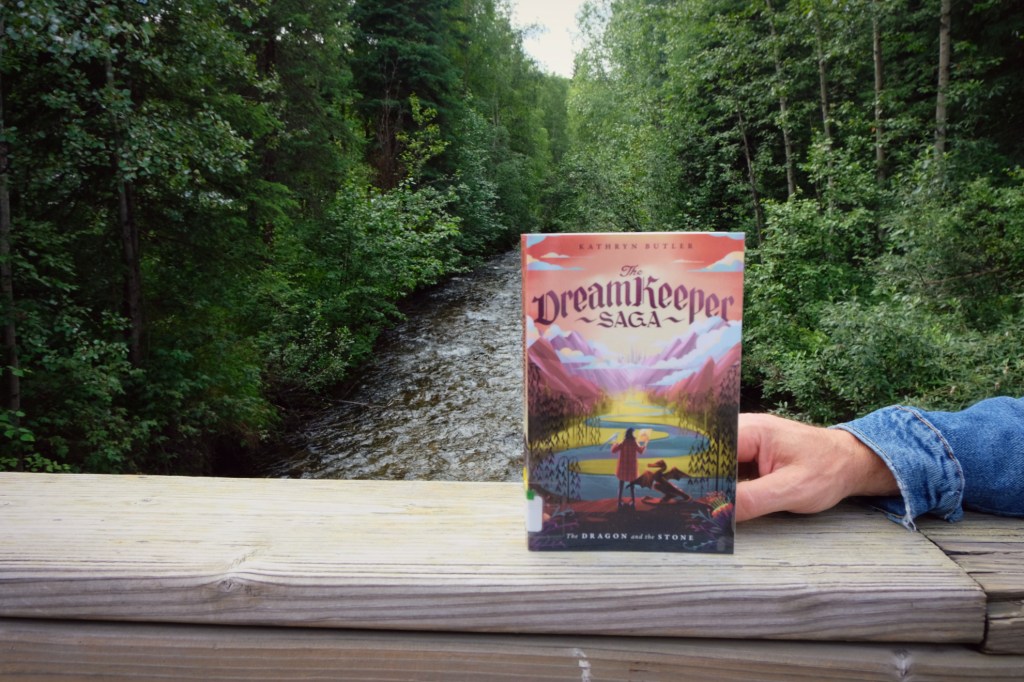
I’m giving this a hearty 4 stars rating and have high hopes the the rest of the Dreamkeeper Saga will attain to a perfect 5. Do you have other children’s Christian Fiction recommendations I should try? Also, does anyone recognize the train in the first cover photo? Tell me if you’ve been there too or would like to hear about it. Happy reading and summer adventures!

Fantasy · Full Reviews · Science Fiction

The Boy Who Fell From the Stars

I don’t review much children’s fiction here on the blog, but I absolutely cannot pass up the opportunity to talk about this gem, The Boy Who Fell from the Stars. Not only is it Christian fiction (hard to find for kids these days) it also falls into the science fiction genre… with just a dash of fantasy. I really wish this series (a three book set: And They Found Dragons) had been available when I was growing up– it would have checked every box for me. Spaceships? Yes. Young people tasked with saving humanity? Yes. Maybe throw some dragon slaying in there? Why not? Yes!

Best of all, the authors don’t resort to making the entire thing an allegory to incorporate Christian messages. Some elements allude to truths, certainly– such as the dragons themselves as a representation of fear– and certainly, the setting is a far-fetched at times; but it doesn’t completely disconnect from regular Christian life. Which is all the more surprising considering this was written by Ted Dekker and his daughter Rachelle. In my mind, surreal alternate realities are their trademark style, for good or bad… and I’m glad they stayed more grounded here.

Truth be told, I hope the Dekkers continue to focus on children’s literature. It seems to be the perfect framework for their unique style. Their creative and colorful storytelling glows in an imaginative young mind, while Ted has toned down the darker, more violent aspects of his writing (I think one of his biggest detractors among adult readers I’ve spoken with). Rachelle has been criticized for being too vague with the Christian messages she includes in her books, but when writing for children she necessarily makes her points clearer and more distinctly anchored to Scripture.

So what is the story? Here’s an excerpt from the synopsis:

It is said a child will lead them. But lead them where?
Jack is just 12, born on an Ark orbiting Earth among 169 survivors of a global apocalypse who eagerly await the planet’s restoration so they can return to the surface. With supplies dangerously low, the time for waiting is over. Humanity must return now or die among the stars.
Unfortunately there is a problem. A big one. Dragons have inexplicably risen from Earth’s ashes. 

Jack, the protagonist, is an extremely likable hero. Girls will enjoy his plucky best friend, Samantha. Jack’s mom–who teaches him about Yeshua despite anti-religion laws–is basically a walking talking hug in the best possible way. The Biblical messages were pretty down to earth (pun fully intended!) and I loved that when a situation got tough, Jack’s mom didn’t make empty promises–she explained to him that if something bad DID happen, everything would still be okay because they are trusting in God and would be with Him. Ultimately, His plan is good, even in hard times! I am also still chewing on some truth shared during a scary moment, when Jack thinks about 1 John 4:18. (...perfect love casts out fear...)

All in all, if you are looking for something with good messages and a bit of color, I would recommend this as a perfect family read-aloud, especially for those with little ones old enough to not be too frightened by a “mad scientist” doctor or the threat of toxin-spewing dragons (maybe 9 and up?). I haven’t read books 2 and 3 yet, but my fingers are crossed for an even better sequel and finale to this great series opener.

Allegory · Full Reviews

Full Review, The Book of Told

“Where were you when I wrote the first words of this story? Tell me if you understand. Who marked out its chapters? Surely you know. Who stretched the story arc across it? On what were its structures set, or who laid the first cornerstone?”

~The Author, when Brew accuses him of being responsible for the painful death of his brother.

What if you found out you were just a word in an author’s book? That this world was His creation and story, but that he had given you free will to decide what kind of character (word) you would be? What if the author penned himself into his own story and promised that those who were words of life in his book would be granted to become ‘real’ at the end of the final chapters, and live in reality with him? What if in six years, you and the inhabitants of your valley experienced an allegorical version of nearly all of human history?  This is The Book of Told: Mere Words.

No matter how I summarize K. A. Gunn’s work, I feel as if I am swaying back and forth between either over-simplification or representing it as extremely complicated. While it is unique in concept, it is not entirely hard to understand or follow – just challenging to describe. You could almost imagine that it is like Pilgrim’s Progress, if Pilgrim made his journey as a Christian but was also traveling through world history, in addition to his own life. However, unlike Pilgrim’s Progress— or even Hind’s Feet in High Places— the main character is relatively stationary in his valley and the narrative involves all the things taking place between the different people who live there.

The language and plot-line of The Book of Told are much easier for me to follow than the aforementioned allegories, given that it was written in a modern-day style and vernacular. Human history doesn’t always condense down into the smooth pacing desired in fiction, so the story can at times feel… fragmented. That said, Gunn does a decent job of weaving the main character’s life through the larger picture to hold it all together and keep things moving. (Side thought… have any of you read Ted Dekker’s Black? This reminds me of Black’s “other reality”, but a lot less fantastical/outlandish.) Like many allegories, there are plenty of “theological pauses,” where the characters stop to discuss or try to wrap their minds around ideas, such as creation vs. evolution or the dangers of entertainment.

What the book lacked in a few minor ways I’ve already mentioned, it more than makes up for by practically fulfilling the very definition of ingenuity: the quality of being clever, original, and inventive. Gunn employs a lot of wordplay and wit, and some of it borders on genius. But ultimately, what I love about this book is that it doesn’t draw attention to itself, but to our Lord and His brilliance.

At times quiet and reflective, at other times (especially in the second half) full of action and conflict, I would recommend this book to anyone who’s been a Christian for some time. It can be difficult to draw out the parallels and soak up the meaning–frankly, I’m still scratching my head and wondering what a lot of the symbolism stood for. I recommended it to my Pastor, and perhaps he will point me in the right direction; notwithstanding, I can easily see myself re-reading this treasure in the near future to see if I can glean some more goodness from the details I glazed over. When I do, or if I alternatively discover something I disagree with upon understanding the meaning, I would love to write up another post to share my findings.

History lovers, allegory readers, and English language devotees, I hope you grab a copy, and be encouraged that the author pledged all the royalties from your purchases to the A21 Campaign, a non-profit which works to end human trafficking and slavery.

To close, which Christian allegory do you think you’ll be more likely to read next; this one or Hind’s Feet on High Places (review here)? Let me know in the comments.

An arrow zinged too close, and I held up my shield swiftly to stub it. Cheers of approval rang out behind me. Still, Told held us back from the attack.

This time, an Untold phrase charged madly into the dome with weapons aimed. “Between ignorance and intelligence!” they shouted their war cry.

Startled they would claim intelligence, given their name, I laughed tensely. Again, they ran by us to attack Som, Duso, and Reson on the stairs. Again, we shouted tribute. “Fear of the author is the beginning of wisdom!”

– Chapter 59

Disclosure for readers– I should note that a mild swear word is used near the beginning of the book when a character grieves the death of a family member. It is not used in any passage thereafter.

Full Reviews · Historical

Saving Amelie, Full Review

I’ve been busy, book friends—I’ve been on a trip to Germany! More than two weeks spent mostly in the little Bavarian village of Oberammergau. It’s a place where fragrant breakfast rolls and strudels warm your mouth and your heart… and the Alps reach up with snowy hands as if ready to catch the sky if it falls. This is the home of the Passion Play, which has been performed by the locals once a decade for over 350 years.

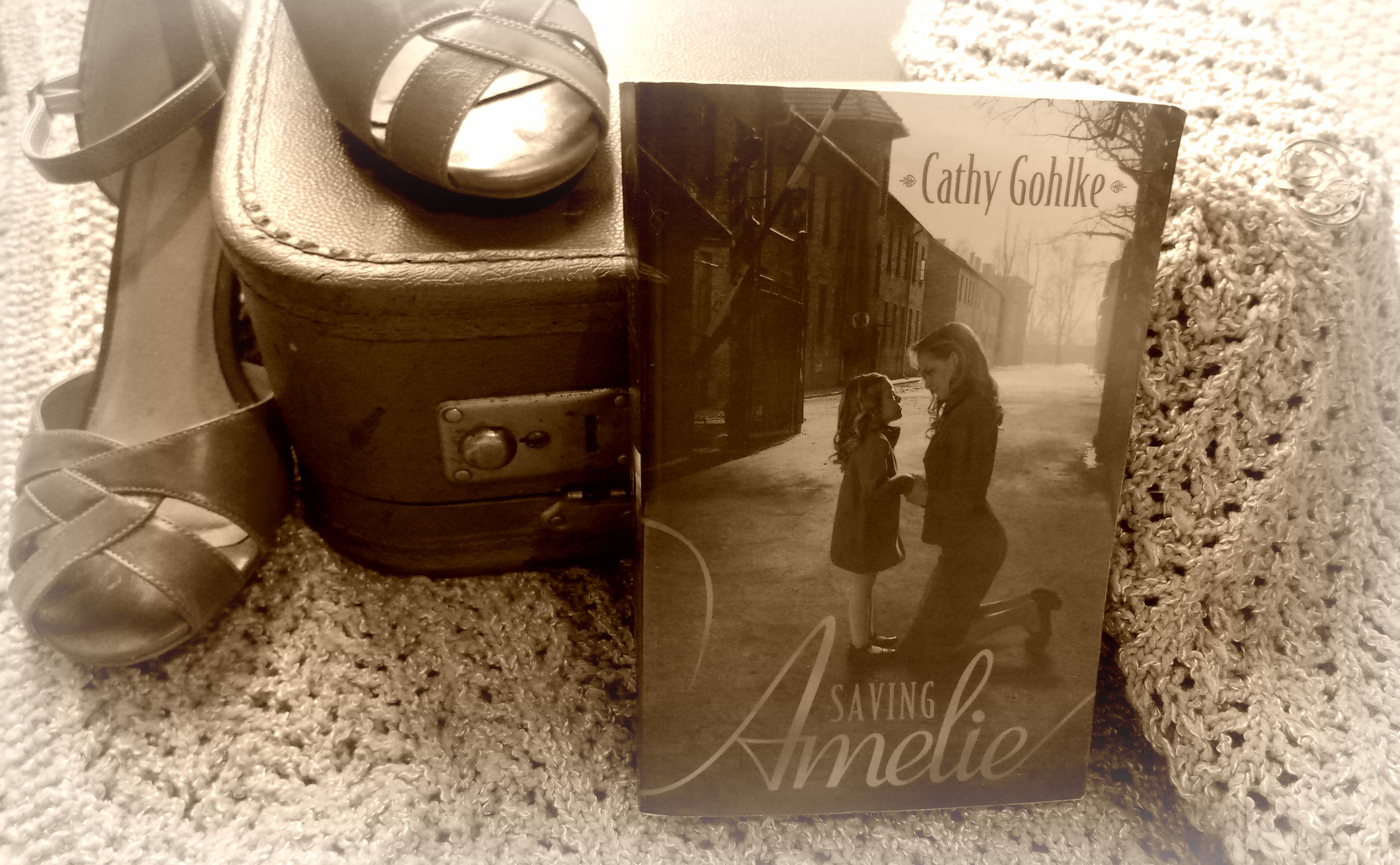
Of course, I haven’t been there literally; who has money to travel? I’ve been immersed in a WWII novel by Cathy Gohlke—Saving Amelie. If you’ve been following my blog for a while, you may remember it as one of the books in my bargain haul from Tyndale. $5 for a ticket back in time is certainly a fare I can afford!

Based on the back-cover summary, I initially thought that the story would be at least partly from the point of view of Kristine Schlick, a young mother unsure how to protect her deaf daughter. Married to an SS officer who views the little girl as a blight on his Aryan bloodline, Kristine is forced to turn to an old friend for help. Rachel Cramer, the true protagonist, steps in as a hesitant hero and escapes with Kristine’s child to the little village of Oberammergau. There, she deals with some shocking discoveries about her own past.

Rachel isn’t a gallant hero, despite the whirlwind of danger and deception she finds herself entrenched in. She’s somewhat selfish, a consequence of being raised in the affluent and prejudiced home of a eugenics scientist. Unable to stomach the depravity she comes face to face with among her father’s circle in Germany, Rachel takes a stand for morality… but remains reluctant to help others with their more mundane and down-to-earth needs.

There’s a romantic interest—Jason Young, an American journalist with resistance connections—as well as a whole host of other lovable characters. As both Rachel and Jason begin to understand Christ’s sacrifice for mankind, they also become more selfless… and this is where the core of the story lies, in what Gohlke emphasizes as “costly grace”—grace that requires a servant’s heart and a surrendering of your own desires.

Despite the hard realities of WWII, Gohlke manages to keep the book from becoming too gritty. She deftly paints the heartaches and struggles of her characters but manages quite a bit of good luck (or perhaps she would call it providence!) for them as well. One or two key plot lines seemed utterly far-fetched and unconvincing to me—ultimately hurting my rating of the book, which otherwise could have been a 5/5. That said, if you relish stories that feature undercover subterfuge or a mysterious underground resistance, you’ll probably still find yourself thoroughly enjoying Saving Amelie.

4/5

Suspense · Thriller

Full Review, Centralia

centralia2

“Centralia.” He said it out loud, hoping the auditory stimulation would trigger something, anything. But it didn’t. It was just a word, nothing more than a string of letters, a compilation of sounds.

Again tears came to his eyes, and he brushed them away. Regardless of whether he knew what the note meant, this was the proof he’d been looking for. Lilly was alive. And her note said they’d both gone together. If Lilly was alive, he had every reason to believe Karen was too.

He had to find them. He had to figure out what Centralia was and what he was supposed to remember.

Centralia
by Mike Dellosso, ©2015
Tyndale House Publishers

Centralia holds a special place today because it is the first suspense/thriller I have reviewed on the blog. This book is also the first one I finished from the Tyndale book haul I shared a while back. It’s also the first book since Sutter’s Cross by a male author. So, is it worth all those firsts?

Centralia is the story of Peter Ryan, who wakes up one morning looking for his wife and daughter only to discover that they both died in a car accident he doesn’t remember. As the back cover puts it, “Haunted by faint memories and flashes of details, Peter becomes convinced that something isn’t right and begins to question reality.” Peter goes on the run to try to find his family –if he even still has one. But confusing memories aren’t the only thing haunting him; hit men follow him every step of the way and Peter can’t afford to make any mistakes.

While this isn’t the kind of story I typically read, I really enjoyed it. One thing author Mike Dellosso did right was including the strong family element. In a book full of shootouts, close calls, car chases, and questions, Peter Ryan’s need to find his wife and daughter kept things grounded and meaningful. On another level, Peter also begins to remember a relationship with God he didn’t know he had, buried somewhere in his confusing and jumbled past.

centralia3.jpg

Between trying to figure out which memories are real, (was he a mild-mannered scientist? An army ranger with a medal of honor? A divorcee or happily married?) I should warn you that a lot of people die. I lost count after fifteen (mostly nameless assassins after Peter) people expired, so this book might not be for you or for younger people. I did appreciate that Dellosso included this section dealing with Peter’s grief over the lives lost as he’s tried to escape:

…But in the aftermath, looking at the collection of casualties in the parking lot, he wondered who these men were when they weren’t being used as killing machines. Did they have wives who would grow ashen at the news? Children who would never again hear their father’s voice reading them a bedtime story? The thought made Peter sick.

God in heaven, forgive me. Deliver me from this evil.”

As for negatives, I did think the ending was a little bit underwhelming, and some components of the story were a  or bit over-the-topespecially convenient for the hero. A ventilation chimney leading straight out of the bad guys’ bunker complete with a ladder to the top and a metal grate cover (that isn’t even fastened on!) comes to mind. But it’s ultimately all part of the Marvel movie-ish fun and action.

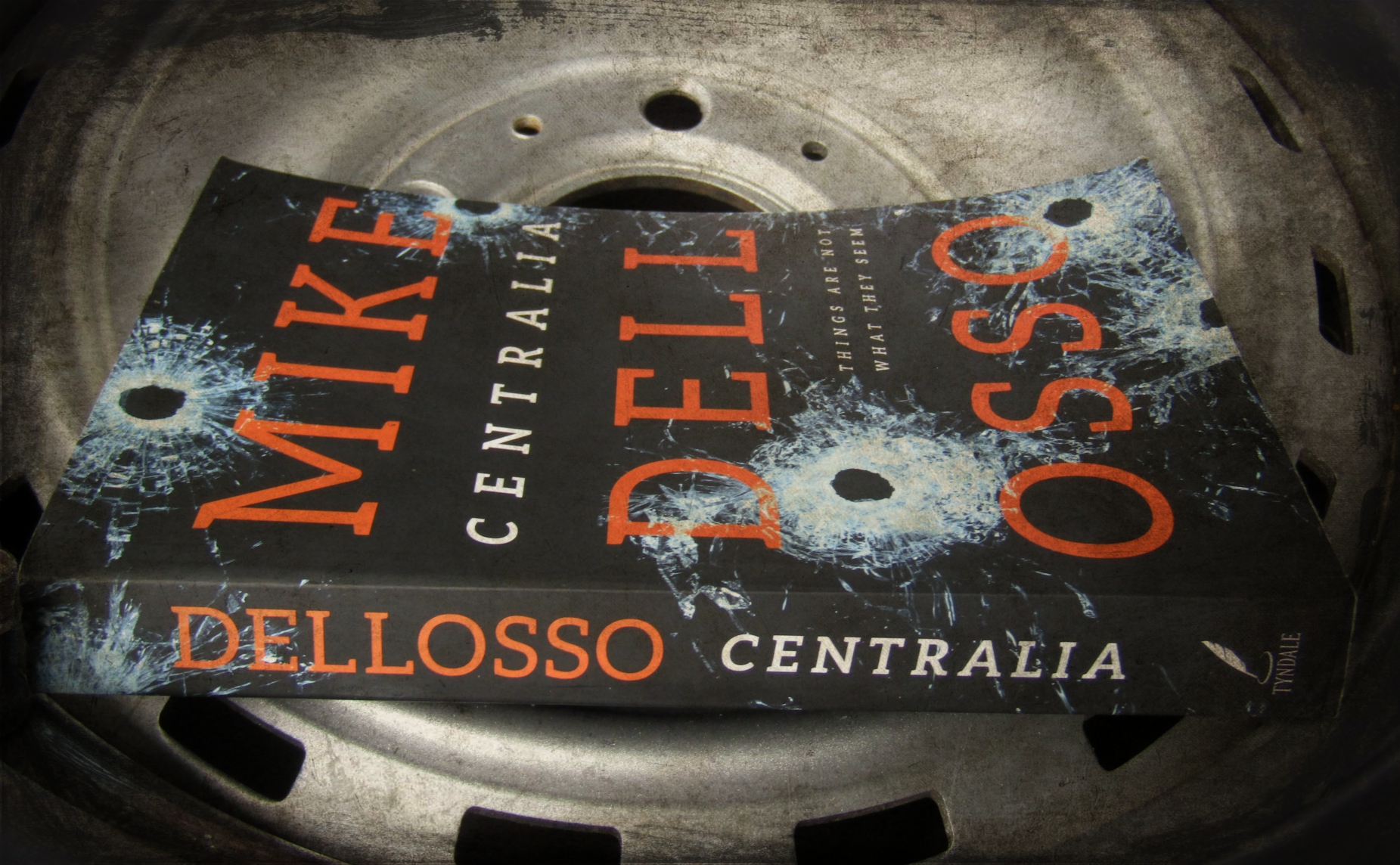
The front cover quietly warns that “things are not what they seem.” But if you think this book seems like an energy-infused story full of revelations and heart…you might just be right.

Contemporary · Full Reviews

Full Review, My Hands Came Away Red

MyHandsCameAwayRed.png

The long sweep of beach that fronted the village was my favorite place. During those first days on the island, it became the spot I headed for with my Bible every morning after breakfast, the place I went when I needed five minutes alone. A row of tall coconut trees growing on the fringe of the jungle curved out over the sand like a one-armed embrace, and if you looked back from the beach you could see how the village had settled neatly into the bowl of the valley, as if hundreds of frail toy houses had tumbled down the surrounding hills and come to rest together at the bottom.

My Hands Came Away Red
By Lisa McKay
Moody Publishers, ©2007

Continue reading “Full Review, My Hands Came Away Red”